
~ WAP
Sunday, June 8, 2025
Who's your favorite Miss World? 👑

2025 – Opal Suchata Chuangsri 🇹🇭 Thailand
2023 – Krystyna Pyszková 🇨🇿 Czech Republic
2021 – Karolina Bielawska 🇵🇱 Poland
2019 – Toni-Ann Singh 🇯🇲 Jamaica
2018 – Vanessa Ponce de León 🇲🇽 Mexico
2017 – Manushi Chhillar 🇮🇳 India
2016 – Stephanie Del Valle 🇵🇷 Puerto Rico
2015 – Mireia Lalaguna 🇪🇸 Spain
Src: #missworld / social media
2023 – Krystyna Pyszková 🇨🇿 Czech Republic
2021 – Karolina Bielawska 🇵🇱 Poland
2019 – Toni-Ann Singh 🇯🇲 Jamaica
2018 – Vanessa Ponce de León 🇲🇽 Mexico
2017 – Manushi Chhillar 🇮🇳 India
2016 – Stephanie Del Valle 🇵🇷 Puerto Rico
2015 – Mireia Lalaguna 🇪🇸 Spain
Src: #missworld / social media
KUKI REPATRIATION 2967-1973: Lenin Haokip
Kukis Repatriated to their native place in the year 1967-1973 are not Refugees
The repatriated indian Origin in the year 1967-1973 are not refugees or illegal immigrants. it's merely radical Meitei and accomplice, false narratives to manipulate Kuki history
The radicalized Meiteis tarnished the image of Kuki as refugees which in fact are not refugees or illegal immigrants. They are repatriated Indian Citizens, who fled into Kabaw valley (Now, Myanmar) during 1956-1966 from Ukhrul, Senapati & Tengnoupal Districts due to Naga Militants (NNC-Tangkhul Region's) excessive harassment on innocent and an unarmed Kuki civilian Villagers and assassination of Kuki leaders and Chiefs.
Altogether 60 Kuki Chiefs and leaders were assassinated and 46 Kuki villages were uprooted from 1956 to 1988 by Manipuri Naga Militants who later came to be known as National Socialist Council of Nagalim, Isaac-Muivah (NSCN-IM) on 30 April, 1988.
The Government of Burma in the year 1967 conducted Khadowmi Operation to flush out Indian citizens from Burma and sent back all Indian who fled into Burma from Manipur.
This repatriation of Indian Citizens from Burma(Myanmar) was conducted with the mutual approval of Government of India & Government of Manipur and Government of Burma respectively.
These repatriated Indian citizens were provided reliefs by the Govt of India through Govt of Manipur vide D.C.No. B-R/DC/1314-6, 6th June, 1968.
However, those original settlers of Kabaw (Kubo) valley were made to stay back in Burma by the Burmese Government. It is also brought herein, to note that there were also Manipuri Naga Indian Citizens who were repatriated refugees in 1967.
The word Repatriated means "returning to their country of origin." Radicalized Meitei and Ashang Kasar, self style Indigenous Forum Manipur, Sapamcha Jadumani, self style Federation of Haomee, should understand each word and utter their narratives carefully.
~Lenin Haokip

Src: 👇Kukiland: Facebook page
Hetna Belap: COPYRIGHTS IPIHAM? ~ Dr TS Haokip

Copyrights kitihi thusim-lasim hihen, thu le la, Arts hihen Philosophy leh Quotations leh thil dang dang hijong leh abolho/ asemho hetpehna ahilou leh lasemho, thusim-lasim jihho mimal thuneina @ Copyrights jana pehding tina ahi.
Copyrights iti manchah ding ham?
Thusim-lasim leh Articles, Documents, Arts, Designs etc etc ho imanchah nom leh Copyrights regulations juiding tina ahi.
Chomlam tah a eiho level/ standard/ status a hetthei dinga anoiya banga hi Copyrights bolding tina ahi.👇
# Mikhat or midang Article or Thusim ahilou leh Arts ham Design ahilou jongleh Quotation leh thil dang dang imanchah nom leh anoiya banga bolding ahi.
i) Courtesy: ..... abc or zyz tichu akilahdoh na mun leh lekha or Writer ho min sutpeh ding ahi.
ii) Reference: abc or xzy ..
tia ilahdohna lekhabu or writer ho min suhmang louding ahi.
iii) Sources: abc or zyz ... tia sutding/ minphah ding ahi.
Keima mimal a seiding in ka "ARTICLES leh WRITE UPS" phachompi ho, a writer keima minho kilahdoh a, ama a dan dan a, bol a Group tamthim hi achesa kum 10 sung ah hin tamthimpi ahung umhi, hethem loujeh ahidan kahin mudoh toh kilhon a, chunga chomcha kisei hokhu chepi ding ahidan hung kitahlang ahi.
With regards,
Dr. TS Haokip, Activist. 7th June, 2025.
Copyrights iti manchah ding ham?
Thusim-lasim leh Articles, Documents, Arts, Designs etc etc ho imanchah nom leh Copyrights regulations juiding tina ahi.
Chomlam tah a eiho level/ standard/ status a hetthei dinga anoiya banga hi Copyrights bolding tina ahi.👇
# Mikhat or midang Article or Thusim ahilou leh Arts ham Design ahilou jongleh Quotation leh thil dang dang imanchah nom leh anoiya banga bolding ahi.
i) Courtesy: ..... abc or zyz tichu akilahdoh na mun leh lekha or Writer ho min sutpeh ding ahi.
ii) Reference: abc or xzy ..
tia ilahdohna lekhabu or writer ho min suhmang louding ahi.
iii) Sources: abc or zyz ... tia sutding/ minphah ding ahi.
Keima mimal a seiding in ka "ARTICLES leh WRITE UPS" phachompi ho, a writer keima minho kilahdoh a, ama a dan dan a, bol a Group tamthim hi achesa kum 10 sung ah hin tamthimpi ahung umhi, hethem loujeh ahidan kahin mudoh toh kilhon a, chunga chomcha kisei hokhu chepi ding ahidan hung kitahlang ahi.
With regards,
Dr. TS Haokip, Activist. 7th June, 2025.
~ KReF


Saturday, June 7, 2025
Suangdoh: TUKAAL KHOSUNG THUPIANGTE | by Nu Vungzaniang

1. Lou haamkhoh atam jaw in panta, tukaal in lougiak bang jahhiam om, guah a juk jeljel jiak in loukhoh nongkai.
2. World Environment Day in Suangdoh H/S Campus ah singnou suan uh.
3. Kaikho-En Academy Staff-te'n a omna uh kikhekkualna thupitak nei uh.
4. Ningani (05.06.2025) nitak in EBCC Peniel, Kanaan Veng, New Lamka pan Tuailai pawl (BYF) in i saptuam vehna ong nei uh.
5. Pa Pauneng in Sakhi khat man, thu kija dan in aman Sakhi 2 manta chi hi.
6. Tuni in i khosung ah ZYA Committee-te'n a Pisa uah a van neihte uh hahsiangna nei uh.
7. Tuni Kiginni a hih toh kiton in, lougiakte ong pai siausiau uh.
8. Kiginni ahih toh kiton in, i khosung, alang alang ah annsukkhawl in ann hek jaihjaih hi.
07-06-2025 | Saturday
©𝐙𝐨𝐠𝐚𝐦 𝐈𝐧𝐒𝐢𝐠𝐡𝐭
2. World Environment Day in Suangdoh H/S Campus ah singnou suan uh.
3. Kaikho-En Academy Staff-te'n a omna uh kikhekkualna thupitak nei uh.
4. Ningani (05.06.2025) nitak in EBCC Peniel, Kanaan Veng, New Lamka pan Tuailai pawl (BYF) in i saptuam vehna ong nei uh.
5. Pa Pauneng in Sakhi khat man, thu kija dan in aman Sakhi 2 manta chi hi.
6. Tuni in i khosung ah ZYA Committee-te'n a Pisa uah a van neihte uh hahsiangna nei uh.
7. Tuni Kiginni a hih toh kiton in, lougiakte ong pai siausiau uh.
8. Kiginni ahih toh kiton in, i khosung, alang alang ah annsukkhawl in ann hek jaihjaih hi.
07-06-2025 | Saturday
©𝐙𝐨𝐠𝐚𝐦 𝐈𝐧𝐒𝐢𝐠𝐡𝐭
TUINING KHODOU PAWI 1982

Zomi Khodou Pawi at Tuining. 21st April 1982
Zo/Zou Tribe, Zomi ma ihi!
Zo/Zou Tribe, Zomi ma ihi!
~ WAP
Tungzang leh Tuithang khua

Tungzang leh Tuithang a CC/ CNA te – ei' kap kul lo, taaimang ta uh.
Zogam Tangvalte – mun hoih tak kila suak tading hi💪🙏
Zogam ei'a hiven, kuan ong tuh zo mawk ding?
Tha saankhawm ni, Zogam Tangvalte aw...🤍
07-06-2025 | Saturday
©𝐙𝐨𝐠𝐚𝐦 𝐈𝐧𝐒𝐢𝐠𝐡𝐭
Zogam Tangvalte – mun hoih tak kila suak tading hi💪🙏
Zogam ei'a hiven, kuan ong tuh zo mawk ding?
Tha saankhawm ni, Zogam Tangvalte aw...🤍
07-06-2025 | Saturday
©𝐙𝐨𝐠𝐚𝐦 𝐈𝐧𝐒𝐢𝐠𝐡𝐭
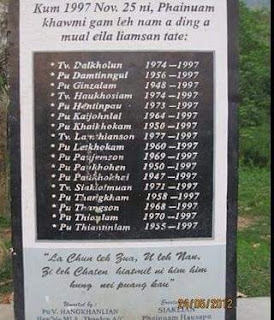

LOKLAIPHAI FRONTLINE RELIEF

Lamka, June 5, 2025: Tuni zinglam 7:30 am in, Loklaiphai frontline volunteers a ding neek-leh- taak piakkhiakna, Zomi Council Relief Committee in, a nuai a bang in nei hi:
1. Rice
2. Dal
3. Chana
4. Matar
5. Essential oil
6. Sugar
7. Salt
8. Soap
9. Toothpaste
10. Toothbrush
11. Potato
12. Onion
13. Turmeric powder
14. Ngathu
15. Mosquito repellent
16. Tea leaf
17. Dishwash
18. Surf
19. Eggs
20. Garlic
Media & Publicity
Zomi Council
1. Rice
2. Dal
3. Chana
4. Matar
5. Essential oil
6. Sugar
7. Salt
8. Soap
9. Toothpaste
10. Toothbrush
11. Potato
12. Onion
13. Turmeric powder
14. Ngathu
15. Mosquito repellent
16. Tea leaf
17. Dishwash
18. Surf
19. Eggs
20. Garlic
Media & Publicity
Zomi Council
WKZIC writes OPEN MEMORANDUM to NIA

Ref.No.63/WKZIC-GHQ/(Memo)/2023-25
According to the 'Ukhrul Times/UT Desk', dated, the 31st October 2023, SDPO Lt. Chingtham Anand Kumar was given Rs. 50,00,000/- (Fifty Lakhs Rupees) as ex-gratia, whereas S.I Onkhomang Haokip (Epao@ Chronicle News Service & Imphal Times News, February 11, 2024) who was killed by a Sniper while on Official Duty at Chingphei was given only Rs. 10,00, 000 (Ten Lakhs Rupees) to his next kins as ex-gratia. This clearly shows "Meitei lives five times precious than Kuki lives, and Kukis lives 5 times lesser than Meiteis in the eyes of the Government of Manipur, who also freely given out 6,000 Arms and 60,000 Ammunitions to Arambai Tenggol (AT) militants from the state Armoury of Manipur for total elimination of the Kukis in 2023"._
We, therefore urge the Central and State Security Forces and NIA Officials to arrest as quickly as possible the killers of S.I Onkhomang Haokip and give the due amount of Rs. 40,00,000/- (Forty Lakh Rupees) to his family members and arrest Mairembam Ramesh Mangang, Korounganba Khuman and Robin Mangang AT Sekmai and other aggressors, than arresting victimised and defender Kuki Village guards who guarded their homes, villages and family._
Sd/-
(T. SAMUEL ZOU) General Secretary
Sd/-
(DR.TS HAOKIP),
President
Copy to:
NIA (National Investigation Agency)b Headquarters, CGO Complex, Lodhi Road, New Delhi – 110003, for kind information and necessary action(s).
"OPEN MEMORANDUM" The 6th June 2025
To,
The District and Sessions Judge, Designated Special Court for National Investigation Agency (NIA) Chrachandpur, Manipur.
Subject: Strong Resentment over the Arrest of Mr. Kamginthang Gangte of Moreh for suspicion in the killing of Chingtham Ananda Kumar, SDPO Moreh on the 31st October 2023, and Selective Blindness towards Arambai Tenggol (AT) leaders and Chief Mr. Korounganba Khuman, Vide, FIR No: RC-03/2024/NIA/IMP, Dated, 9/2/2024 PS: NIA Imphal district, Imphal West;
i) Indian Penal Code, 1860: Sections 147, 148, 149, 186, 188, 307, 379A, 395, 504, 505, 506, 34.
ii) Unlawful activities (Prevention) Act,1967: Section 18.
iii) Official Secret Act, 1923: Section 6(1)(a).
iv) Arms Act, 1959: Sections 25(1-B).
v) FIR No.1345(11) 2023 at Porompat, PS, Sub-Division Porompat, District, Imphal East, Manipur, dated, 1/11/2023.
Respected Sir,
We express strong resentment over the the Arrest of Mr. Kamginthang Gangte at around 3:00 PM on the 5th June 2025 from his residence at Mission Veng, Moreh,Tengnoupal district by the Assam Rifles and NIA, on suspicion in the killing of SDPO Chingtham Anand Kumar in 2023, while keeping silent in the case of Arambai Tenggol (AT) Chief Mr. Korounganba Khuman and others who were responsible for the killing of hundreds of Kukis.
To,
The District and Sessions Judge, Designated Special Court for National Investigation Agency (NIA) Chrachandpur, Manipur.
Subject: Strong Resentment over the Arrest of Mr. Kamginthang Gangte of Moreh for suspicion in the killing of Chingtham Ananda Kumar, SDPO Moreh on the 31st October 2023, and Selective Blindness towards Arambai Tenggol (AT) leaders and Chief Mr. Korounganba Khuman, Vide, FIR No: RC-03/2024/NIA/IMP, Dated, 9/2/2024 PS: NIA Imphal district, Imphal West;
i) Indian Penal Code, 1860: Sections 147, 148, 149, 186, 188, 307, 379A, 395, 504, 505, 506, 34.
ii) Unlawful activities (Prevention) Act,1967: Section 18.
iii) Official Secret Act, 1923: Section 6(1)(a).
iv) Arms Act, 1959: Sections 25(1-B).
v) FIR No.1345(11) 2023 at Porompat, PS, Sub-Division Porompat, District, Imphal East, Manipur, dated, 1/11/2023.
Respected Sir,
We express strong resentment over the the Arrest of Mr. Kamginthang Gangte at around 3:00 PM on the 5th June 2025 from his residence at Mission Veng, Moreh,Tengnoupal district by the Assam Rifles and NIA, on suspicion in the killing of SDPO Chingtham Anand Kumar in 2023, while keeping silent in the case of Arambai Tenggol (AT) Chief Mr. Korounganba Khuman and others who were responsible for the killing of hundreds of Kukis.
It is really surprising that the security forces and NIA have so far not been arrested Mr. Mairembam Ramesh Mangang who beheaded by cutting the neck of Mr. David Thiek in the most humiliating manner on the 2nd July 2023, whose picture is pasted here for the information of SF and NIA officials.
According to the 'Ukhrul Times/UT Desk', dated, the 31st October 2023, SDPO Lt. Chingtham Anand Kumar was given Rs. 50,00,000/- (Fifty Lakhs Rupees) as ex-gratia, whereas S.I Onkhomang Haokip (Epao@ Chronicle News Service & Imphal Times News, February 11, 2024) who was killed by a Sniper while on Official Duty at Chingphei was given only Rs. 10,00, 000 (Ten Lakhs Rupees) to his next kins as ex-gratia. This clearly shows "Meitei lives five times precious than Kuki lives, and Kukis lives 5 times lesser than Meiteis in the eyes of the Government of Manipur, who also freely given out 6,000 Arms and 60,000 Ammunitions to Arambai Tenggol (AT) militants from the state Armoury of Manipur for total elimination of the Kukis in 2023"._
We, therefore urge the Central and State Security Forces and NIA Officials to arrest as quickly as possible the killers of S.I Onkhomang Haokip and give the due amount of Rs. 40,00,000/- (Forty Lakh Rupees) to his family members and arrest Mairembam Ramesh Mangang, Korounganba Khuman and Robin Mangang AT Sekmai and other aggressors, than arresting victimised and defender Kuki Village guards who guarded their homes, villages and family._
Sd/-
(T. SAMUEL ZOU) General Secretary
Sd/-
(DR.TS HAOKIP),
President
Copy to:
NIA (National Investigation Agency)b Headquarters, CGO Complex, Lodhi Road, New Delhi – 110003, for kind information and necessary action(s).
~ WKZIC
KHALTAL CHANNEL thusuah toh kisai a Hilhchetna leh Mohpaihna

KHALTAL CHANNEL thusuah toh kisai a Hilhchetna leh Mohpaihna
THE IDEA OF KUKILAND

By :- Thanglam Manlun,
Independent freelance writer.
Historical base a, Kuki lhinna ho ban neichan anave'u hite.
1) KUKI COUNTRY :- Kuki kiti nam minhi, deimo lheh jong leuhen, tu dinmun'a paithei ahipon ahi. Ajeh chu British writer hon, Kuki toh gam akilbeh tha'u ahitan, Kuki ideimo'uva, ipaiju leh gam neilou akisodiu ahi. Languagestic survey of India, 1904 volume iii part iii a, Kuki country Map kikilbeh ahitan ahi. Hiche hi claim bolna din, geo-political vision sang tah neipum'a, human rights through a bolding angaiyin ahi. Historical base a Kuki country claim boldin, Mark Thangmang Haokip, ahung kipan in ahileh inlen (jail) ingasah tauvin ahi. SoO hon, nangho seh seh Kuki politics thu seithei dinga nakigel'u hi dihlou ahi. Nang hon nabol dingdol kibollun lang, midang hon jong, abol thei thei bolna ding kot nahon diu ngai ahi. The idea of Kukiland a chekhom ding ahi.
2) KUKI STATE/HOMELAND :- India danpi Article 3 in Kuki state or Kuki Homeland semdohna ding kot ahong'in ahi. Hiche article in thaneina apeh chu ahileh, parliament in gam chom khat le gamchom khat gopkhom theina, state khat a kon state chom khat semdoh theina, chuleh gam-gi athah a lhekhen theina leh thaneina lhingset'in apen ahi. Hijeh'a chu Kuki National Assembly in 1960 kum'a, Kuki state semdohna ding memorandum anapeh'u ahitan ahi. Chuleh 1987 Kum'a Pu Nehlun Kipgen in Kuki Homeland dinga, anabanjop ahitan ahi. Ahin, tulang hin Kuki state leh Kuki homeland athidoh tan ahi. Ajeh chu political road-map, ineilou jeh'u ahi.
3) UNION TERRITORY WITH LAGISLATURE :- Hichehi India danpi article 239A noiya ithum'u chu ahi. Hiche ithum'u hi tuni chan geiyin, amin kicheh aumpon, ipi min'a ithum'u ham tijong akihepon ahi. Historical base a seidin, Kukiland tidinga um ahi. Ahin, SoO hon amin umlouva adellu ahidan, Pu SS. Haokip Chairman UKLF in ahoulim na'ah aseidoh tan ahi. Kukiland iseipoh ngam louvu leh Kuki organisation min iput'u ipi'a phachom ham? tin SS. Haokip in aseiyin ahi. Amin umlouva gam kithum chu, dihthei ding hinam?
SoO hon amin umlouva gam leh kivaihomna athum'u hi phading hinam? tichu nam miten, eima eima se le pha hetna a ikigel diu ahimaiyin ahi.
4) SIX SCHEDULE :- Hiche hi India sah solam gamkai, Assam, Mizoram, Meghalaya leh Tripura gam ho'a tribal ho kivaipohna dinga kisem ahi. Hichu India danpi Article 244 (2) leh 275 (1) in thaneina apeh ahi. Manipur gam'in statehood lopna leh kipana December, 1971 a pat 14th March, 1972 chan ana mang'un ahi. Manipur in statehood kipana aman jing laiyin, Lt. Governor shri, D. R. Kohle in, Manipur (hill area) District Council act, 1971 ana gong tuptan ahi. Dan le moul gontup ahitoh kilhon in, MDC election masapen 1973 in ana kibollin ahi. Hiche kum election nikho chun, keiho kho Molkon'ah (Saikul) sepai hotoh kana kivoto'un ahi. MDC amin'a ineiju ahin, Manipur govt. in power apedoh nompon ahi. Hitia amin mai maiya MDC a eilhep'u hi aphachompoi, tin kiphinna leh boycott ihin boltauvin ahi. Amasapen in Sadar hills in 17th Oct, 1988 in MDC asubeitan, aban'in Chandel in 18th March, 1989 in asubeiyin, Senapati in 17th Oct, 1989 in asubeitan ahi. Lamka leh TML in 20th 1990 in chuleh Ukhrul in achaina pen'in 29th Dec, 1990 in asubei tan ahi. Hiti chun phat sotpi MDC neilouvin ihung'um taovin ahi. Khonung 2015 kum'in Manipur govt. in MDC ah eihin lhem kit tauvin ahileh, achop leh amat ithokit tauvin ahi. Hiche phat laichun, MDC lhepna hi ikijosah loudiu aphai, tin lekha kana jih'in ahi. Ahin, koiman thulah in aneipon, MDC lhepna'ah ilhalhum kit tauvin ahi. Phat khat laiya, aphachom poi tia inasuh beisa'u chu, achop leh amat ithokit tauvin ahi. NSCN in vang Boycott abol chah kheh'in ahi. Tu'a jong chamna ahung umteng, Manipur Govt. in MDC a eihin lhep kit dingu ahi. Hiche phat teng chuleh achop leh amat itho kit dingu ham? bollou beh ding ahi. MDC ilah'uva ahileh, chunga ihin seiju, Kuki politics thana ding anchah a hung pang ding ahi. Naga hon alah nom'u leh kilah'un tin, eihon vang ilahlou diuva pha ahi. Meilhei ten objection abollou ding pen chu, six schedule hi ahi. Hijeh'a chu boina khoh laitah'a, Biren in six schedule pehding ahi, tia offer anabolsa ahitan ahi. Six schedule hijong leh financial autonomy aumlou leh phachom louding, Meilhei te noiya kium thou thou ding ahin, amaho kichep nopna bep'a ipan diu ahi. Hijeh'a chu 1988 laiya boycott inabollu ahitan ahi. Hijeh chun nam lamkai hon political road map phatechan sem'un lang, hiche road-map chu ijuidiu angaiyin ahi. Political road-map kicheh ineilou jeh'uva idemand'u phat seh'a kikhel jing ahi. Haosa khat'in Political road-map jih din eiseiyin kajih lou ahi. Ajeh chu idoiju leh itup'u akicheh pon ahi. Homeland road-map jihding ham, TC ahilou leh six schedule road-map jihding ham akicheh umthei lou ahi. Ahimong in kijih jong leh koiman thulah'a aneilou ding, lhohbu natsah hiding ahijeh'a kajihlou ahi. Kicheh sellin Kuki country road-map, ahilou leh state road-map, hinjih'in kiti leh thukhat ahi. Hijong chu SoO hon thulah'a aneilou ding ahin, aphat chomna umlou ding ahi. Political vision kicheh nei chun road-map anei teiding ahi. NSCN ten road-map kicheh anei jeh'un adinmun'u akikhel pon ahi. Hitia khu itup khat chu jangpet'a dinpi ding ngai ahi. Phat jouse'a demand kikhel jingna hin, political road-map kanei pouve, ti phondohna ahi. Chunga ihin seiju country a pat six schedule changei, the idea of Kukiland sunga, ahiding angaiyin ahi. Aneopen six schedule ichandiu hijong leh, Kukiland autonomous District council tiding ahi. Ajeh chu country changei delna thei dinga, the idea of Kukiland iphulut diu angaiyin ahi. SoO hon sangah nakichat'u ham?Kuki selmang ding nagot'u, ole thilha zoumi nakuchat'u ham? Arm movement ana pandoh Pu Thangkholun Haokip leh Pu Nehlun Kipgen lunglhai mong ding hinam? phaten kigellun.
Achaina'n Kuki hi nilhum kon, nidang-san toh abangtan, nam lamkai hon panthah nahin lah'uva, jing niso thah emsel banga, nahin vahsah kitdiuvin ikitem'un ahi.
~ KUKI NEWS
Kuki Inpi War Memorial: Kuki Freedom Fighters
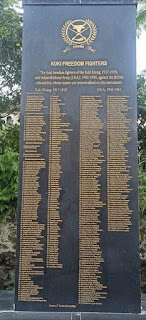
This monument is dedicated to the Kuki Freedom Fighters, honoring those who took part in two major struggles against British colonial rule: the Kuki Rising (1917–1919) and participation in the Indian National Army (INA), 1942–1945. The memorial, erected by the Kuki Inpi War Memorial Committee (KIWMC) on 17th December 2021, immortalizes hundreds of names of Kuki warriors and leaders who resisted foreign domination with unflinching courage and determination. This 1000-word elaboration explores the historical context, the significance of this monument, and its cultural and political resonance.
---
Historical Background
The Kuki Rising (1917–1919)
The Kuki Rising, often termed the "Anglo-Kuki War," was one of the most significant uprisings in Northeast India during the British Raj. Sparked by oppressive colonial practices, especially forced conscription of hill tribes as laborers and porters during World War I, the Kukis saw British policies as not only exploitative but also deeply humiliating. The revolt began in 1917 and spread across the hills of Manipur, present-day Nagaland, and parts of Myanmar.
The Kukis, who were then organized in chieftainships and tribal militias, waged guerrilla warfare against British forces. Although eventually subdued by a better-equipped colonial army, the uprising lasted over two years — a testament to the determination and resilience of the Kuki people. This resistance wasn't just military; it was also symbolic of the assertion of indigenous sovereignty and dignity in the face of imperialism.
Indian National Army (INA), 1942–1945
The second column of names on the monument honors Kuki men who joined the Indian National Army (INA), formed by Indian nationalists in exile with Japanese support during World War II. Led by Subhas Chandra Bose, the INA sought to liberate India from British rule through military action. The INA advanced into Northeast India through Burma and fought battles in the region, including the infamous battles of Imphal and Kohima in 1944.
Many Kuki youth and leaders aligned themselves with this broader national movement, taking great risks as they fought alongside other Indians, united by a common vision of freedom. Their role is often underrepresented in national narratives, and this monument seeks to correct that oversight.
---
The Monument and Its Significance
Standing solemn and majestic, the monument features engraved names of hundreds of individuals. The golden inscriptions etched on the black granite surface ensure that these names are not lost to time. The memorial is divided into two broad sections:
Kuki Rising (1917–1919): Lists of tribal leaders (chiefs and warriors) who resisted British occupation, many of whom were imprisoned or died in colonial custody.
INA (1942–1945): Lists of Kukis who joined the Indian National Army to fight alongside other freedom fighters for India's independence.
This act of memorialization is both commemorative and declarative. It tells future generations that the Kukis were not passive bystanders but active participants in the anti-colonial struggle.
---
Notable Names and Tribes
The monument lists an impressive spectrum of names, many prefixed with traditional Kuki chieftain titles such as "Hausa," "Lalthang," "Thanglian," "Letkhosei," etc., indicating the tribal and clan-based leadership system of the Kukis.
Some notable inclusions:
Chiefs like Letzamang, Chongzong, Hausapu, Kamzachin, Chongzong Haolai.
Villages represented include Saikul, Phaikholum, Tuibuang, Songpi, Tujangwaichong, Chassad, Henglep, Singngat, and many more.
Individuals who died in jails such as Ukhrul Jail and Sylhet Jail are marked specifically, showing the brutal repression they faced.
The inclusion of these names also educates the community and outsiders about the decentralized but united nature of the Kuki resistance — a federation of tribes bound by shared purpose rather than a single political ideology.
---
Cultural and Political Importance
For the Kuki people, this monument serves multiple functions:
1. Cultural Reaffirmation: It reclaims a history that has often been left out of Indian mainstream historiography. The Kuki resistance is rarely taught in Indian textbooks, and such memorials help preserve collective memory and indigenous identity.
2. Political Assertion: Amidst current socio-political challenges faced by the Kukis in Manipur and neighboring regions, the monument stands as a statement of legitimacy and historical contribution. It asserts that Kukis were, and remain, integral to the Indian national journey — not marginal outsiders but frontline fighters.
3. Intergenerational Bridge: For Kuki youth, many of whom face cultural dislocation due to urbanization, migration, or political unrest, this monument offers a point of pride and connection. It tells them who they are and where they come from.
---
The Kuki Struggle in Modern Context
The installation of this monument in 2021 comes amid renewed ethnic tensions in Manipur. Since 2023, the state has witnessed violent ethnic clashes between Meitei and Kuki-Zo communities, reigniting historical grievances and territorial disputes. In such a context, the Kuki Freedom Fighters monument takes on an even deeper relevance.
By showcasing a long-standing history of sacrifice for the greater Indian cause, the Kukis make a powerful argument for recognition, justice, and inclusion. They were freedom fighters, not rebels; patriots, not insurgents. This monument reminds both the Indian state and the broader public of that truth.
---
Conclusion
The Kuki Freedom Fighters Monument, unveiled in 2021, is more than a stone engraving — it is a living document of courage, suffering, and national service. It bridges the memory of the Kuki Rising (1917–1919) and the INA (1942–1945) by honoring the individuals who stood against colonial oppression in two defining moments of India's freedom struggle.
As the names etched on the black granite fade into history, the monument ensures they are never forgotten. It teaches that resistance, however isolated or rural, can be an essential part of a national movement. And for the Kuki people — a proud, resilient community — this monument is a clarion call to remember, reclaim, and rise.
Admin:✍🏻✍🏻✍🏻✍🏻
---
Historical Background
The Kuki Rising (1917–1919)
The Kuki Rising, often termed the "Anglo-Kuki War," was one of the most significant uprisings in Northeast India during the British Raj. Sparked by oppressive colonial practices, especially forced conscription of hill tribes as laborers and porters during World War I, the Kukis saw British policies as not only exploitative but also deeply humiliating. The revolt began in 1917 and spread across the hills of Manipur, present-day Nagaland, and parts of Myanmar.
The Kukis, who were then organized in chieftainships and tribal militias, waged guerrilla warfare against British forces. Although eventually subdued by a better-equipped colonial army, the uprising lasted over two years — a testament to the determination and resilience of the Kuki people. This resistance wasn't just military; it was also symbolic of the assertion of indigenous sovereignty and dignity in the face of imperialism.
Indian National Army (INA), 1942–1945
The second column of names on the monument honors Kuki men who joined the Indian National Army (INA), formed by Indian nationalists in exile with Japanese support during World War II. Led by Subhas Chandra Bose, the INA sought to liberate India from British rule through military action. The INA advanced into Northeast India through Burma and fought battles in the region, including the infamous battles of Imphal and Kohima in 1944.
Many Kuki youth and leaders aligned themselves with this broader national movement, taking great risks as they fought alongside other Indians, united by a common vision of freedom. Their role is often underrepresented in national narratives, and this monument seeks to correct that oversight.
---
The Monument and Its Significance
Standing solemn and majestic, the monument features engraved names of hundreds of individuals. The golden inscriptions etched on the black granite surface ensure that these names are not lost to time. The memorial is divided into two broad sections:
Kuki Rising (1917–1919): Lists of tribal leaders (chiefs and warriors) who resisted British occupation, many of whom were imprisoned or died in colonial custody.
INA (1942–1945): Lists of Kukis who joined the Indian National Army to fight alongside other freedom fighters for India's independence.
This act of memorialization is both commemorative and declarative. It tells future generations that the Kukis were not passive bystanders but active participants in the anti-colonial struggle.
---
Notable Names and Tribes
The monument lists an impressive spectrum of names, many prefixed with traditional Kuki chieftain titles such as "Hausa," "Lalthang," "Thanglian," "Letkhosei," etc., indicating the tribal and clan-based leadership system of the Kukis.
Some notable inclusions:
Chiefs like Letzamang, Chongzong, Hausapu, Kamzachin, Chongzong Haolai.
Villages represented include Saikul, Phaikholum, Tuibuang, Songpi, Tujangwaichong, Chassad, Henglep, Singngat, and many more.
Individuals who died in jails such as Ukhrul Jail and Sylhet Jail are marked specifically, showing the brutal repression they faced.
The inclusion of these names also educates the community and outsiders about the decentralized but united nature of the Kuki resistance — a federation of tribes bound by shared purpose rather than a single political ideology.
---
Cultural and Political Importance
For the Kuki people, this monument serves multiple functions:
1. Cultural Reaffirmation: It reclaims a history that has often been left out of Indian mainstream historiography. The Kuki resistance is rarely taught in Indian textbooks, and such memorials help preserve collective memory and indigenous identity.
2. Political Assertion: Amidst current socio-political challenges faced by the Kukis in Manipur and neighboring regions, the monument stands as a statement of legitimacy and historical contribution. It asserts that Kukis were, and remain, integral to the Indian national journey — not marginal outsiders but frontline fighters.
3. Intergenerational Bridge: For Kuki youth, many of whom face cultural dislocation due to urbanization, migration, or political unrest, this monument offers a point of pride and connection. It tells them who they are and where they come from.
---
The Kuki Struggle in Modern Context
The installation of this monument in 2021 comes amid renewed ethnic tensions in Manipur. Since 2023, the state has witnessed violent ethnic clashes between Meitei and Kuki-Zo communities, reigniting historical grievances and territorial disputes. In such a context, the Kuki Freedom Fighters monument takes on an even deeper relevance.
By showcasing a long-standing history of sacrifice for the greater Indian cause, the Kukis make a powerful argument for recognition, justice, and inclusion. They were freedom fighters, not rebels; patriots, not insurgents. This monument reminds both the Indian state and the broader public of that truth.
---
Conclusion
The Kuki Freedom Fighters Monument, unveiled in 2021, is more than a stone engraving — it is a living document of courage, suffering, and national service. It bridges the memory of the Kuki Rising (1917–1919) and the INA (1942–1945) by honoring the individuals who stood against colonial oppression in two defining moments of India's freedom struggle.
As the names etched on the black granite fade into history, the monument ensures they are never forgotten. It teaches that resistance, however isolated or rural, can be an essential part of a national movement. And for the Kuki people — a proud, resilient community — this monument is a clarion call to remember, reclaim, and rise.
Admin:✍🏻✍🏻✍🏻✍🏻
Source: Mirror of the Kuki Nation WAP
ZOMI HEALING CIRCLE: Call for applications

Zomi healing Circle_* invites application from Zomi Youths to decolonize our minds, reconnect with our ancestral value systems,
learn to heal from colonial trauma, and more. Let's gather, share our stories, and begin the journey of healing as a community.
*Capacity:* 10 (first come, first served)
*Deadline:* June 15th, 2025.
For more details, please refer to the Google Form.
https://shorturl.at/bs0A8
*Mentor:*
Suanmuanlian Tonsing
PhD Candidate
School of Information
University of Michigan- Ann Arbor, US
learn to heal from colonial trauma, and more. Let's gather, share our stories, and begin the journey of healing as a community.
*Capacity:* 10 (first come, first served)
*Deadline:* June 15th, 2025.
For more details, please refer to the Google Form.
https://shorturl.at/bs0A8
*Mentor:*
Suanmuanlian Tonsing
PhD Candidate
School of Information
University of Michigan- Ann Arbor, US
PENTECOST LEH HAM THEILOU A HAMNA ~ Kapboi Suantak

AMASA in eite damna hung pia leh tukum 2025 Pentecost ni mel hung musak ih biak Pasian min ih phat masa uhi.Pentecost ni ahi kei leh khasiangthou piakna ni ahi leh Thukhunlui a Iseral teh pawi tuam tuam teh lak a khat ahi tualeh hi pawi pen thukhunthak hun in Iseral teh in ana zang lai uhi, tualeh hih pawi mang ding in leitung mun tuam tuam apan Iseral teh Jerusalem Juan in hung paijel uhi. Tua bek tham lou in ei gingtu teh a ding in jong ni poimoh khat a hung suak in tuni tan in Jesu shi zaw ni 50 chin na ni Pentecost pawi pen khasiangthou piakna ni chi in ki Jang den hi.
Khaileh tuni in Pentecost thu leh laa leh hih pawi hung pian khiat dan lam gen zaw lou in a chituam deuh tak Mai in Pentecost leh hamtheilou a thugen na chi thulu pansan in saulou in thu bang ja hiam ih ennkhom ding uhi.
Mi tampi a diak in Pentecostal deuh lam teh in Pentecost ni a kha hung tung apat in hamthei lou a thugen leh ham khiatna pen hung kipan ahi chi uhi.Tua bek thamlou in hih ham theilou a thugen or ham na pen khasiangthou silpiak khat ahi chi uhi.Tua ahian in first century a gingtu masa teh in jong hih hamtheilou a ham na toh kisai in buaina tuam tuam ana tuak uhi, adiak in Korin saptuam teh bang leh adang dang jong tampi om ding uhi.Tu hun in jong hih hamtheilou a thugen na muthei thei ding om den lai hi, tua bek hilou in ham theilou guak hi non lou in sil lamdang bawl theina (miracles) toh hung paikhom ta hi.Tu in adiak in Africa gam nasia tak in mawk in Africa a gingtu teh lak a Jawlnei tampi hung kibeh in vision mu leh sil lamdang bawl thei tampi hung piang khia in healing ministry nasatak in hung khang in a hujap in lengtung mun tampi hung nawk kha hi.Tua ahi man in hih hamtheilou a thugen na pen genlou phamoh ta hi, ajiak ei gam sung ngei leh ih khopi sung ngei a jong hung tung khin ta hi .
Hih hamtheilou a thugen leh hamna toh kisai ih thei thei na ding un Laisiangthou translation tuam tuam teh ih enn masa phot ding uhi.
Amaspen in hih Bible verse version tuam tuam a aki lehdan enn masa ni.
English version
Acts 2:4
ESV
And they were all filled with the Holy Spirit and began to speak in other tongues as the Spirit gave them utterance.
NIV
All of them were filled with the Holy Spirit and began to speak in other tongues as the Spirit enabled them.
NASB
And they were all filled with the Holy Spirit and began to speak with different tongues, as the Spirit was giving them the ability to speak out.
NLT
And everyone present was filled with the Holy Spirit and began speaking in other languages, as the Holy Spirit gave them this ability.
KJV
And they were all filled with the Holy Ghost, and began to speak with other tongues, as the Spirit gave them utterance.
English version teng a other tongue's ahi kei leh different tongue's leh other languages Jang tangpi uhi.
Eimi version:
Thangkhal version:
Tuachi`n aun un Khasiangthou in adimta ua, Kha in ahamsak bang jelin hamdang in ahung hamta uhi.
Paite version:
Amaute avek un Kha Siangthou luahdim in a-om ua, Kha in amaute genkhiakna apiak bang in, pau dangte in apau pan uhi.
Teddim chin version:
amaute khempeuh in Kha Siangtho tawh kidimin, Kha Siangtho in thu a piak bangin kam tuamtuam tawh thu a hilh uh hi.
Simte version:
Huleh a bawnun Hagau Siangthou in adimta va, Hagau in ahaamsah bangjelin haam dang in a hung haam panta uhi.
Thadou kuki version:
abonchauvin Lhagao Theng adimsoh keiyun lhagaovin seidoh theina apeh bang cheh-in paochom pao-chomin thu aseipantauve.
Zou version:
Amate a unpi-un Hagau Siengtho tawh a kidim vua, tua Hagau in a pieh siemna bangin kam tuomtuomte tawh a ham uhi.
Eimi version teng a ham tuam tuam leh pao tuam tuam or Pau dangte chi in kilet khia hi, tua ahi man in hih ih translation hua pat in mi khenkhat in ham tuam tuam a ham thei ahi chi pansan uhi.Eimi translation teng a bon hua ki copy tua ma uh a bang hi ajiak English a om khalou ham/Pau pen hung hap Tom uhi.English a ham/Pau (langauge)chi Kammal ki jangkhalou hi, English in lei(tongues) a Chihna tak a eimi translation teng in ham leh pau in kikhek jak ahi man in eimi sung a adiak in ham tuam tuam a ham nuam pawlpi teh a ding pansan hoih khat hung suak hi.Tua ahi man in Laisiangthou translation a ih Kammal jak teh pen poimoh ma mah ahi,adiak in doctrine toh kisai diak teh bang limtak a lehkhiat ding kisam hi.Tua ahi man in ahi thei leai leh ei mani ham leh pau akhiatna (meaning) aki thei nak leh ei mani ham a hoih deuh a lehkhiat ding ahi.
Greek text a ki gel dan:
και επλησθησαν απαντες πνευματος αγιου και ηρξαντο λαλειν ετεραις γλωσσαις καθως το πνευμα εδιδου αυτοις αποφθεγγεσθαι
Greek Kammal a ham tuam tuam leh pau dang dang teh ih chi pen ετεραις γλωσσαις (heterais leh glossais) chi in kimu thei hi ,Heterais Kammal pen heteros apat hung ki pan khia ahia, tualeh akhiatna in adang(other, another) chihna ahi . Glossais ahi leh glossa Kammal apat a hung piang khia ahi tualeh akhiatna in lei (tongue) Chihna ahi.
Ei ham leh pau a bang chi lehkhiat ding lei dang chi ding maw ham dang chi ding, lei pen hamna toh kisai ahi lam pen kithei chiat hi ahinla Laisiangthou a original Greek a ham chi lou in lei chi ahi man in lei mah Jang lei buaina omlou ding hi.Tua ahiman in lei dang dang ahi kei leh lei dang teh chi in let lei dik pen in hoih pen ding hi .Bang ziak a lei dang dang ahi kei leh lei dang teh chia lehkhiat ding ahia ih chi leh hih Greek Kammal tegel ( ετεραις γλωσσαις ) a tawpna (ending) "ais" pen plural (khat sang a tam zaw) genna ahi tua ahi man in lei dang dang ahi kei leh lei dang teh chi in let lei hamtheilou natoh kisai pen hung tom deuh ding in gingta ing.
Hih Greek Kammal ετεραις γλωσσαις lei dang teh Chihna in a gen nop ahi leh ham dang dang teh a gen nop na ahi.Direct tak a hamtheilou teh ih chi tak Chiang in mi tampi in lakhial in a ut a thei in ham jak uhi,tualeh tuadan a ut dan dan a ham jakna pen kha piak ahi chi lai uhi.Hilai a Greek Kammal in a gen nop tak pen ahi leh ham dang chu hima ahinla tulai a teh dan a hamkithei lou leh mumal omlou teh hilou hi, a ham om leh a ham a thei mi leh a ham a Jang mi om teh genna ahi jaw hi.
Pasian in asim kha teng thesiamna hungpia ta hen.
PENTECOST NI JAK NOP CHIAT NI 😊
Khaileh tuni in Pentecost thu leh laa leh hih pawi hung pian khiat dan lam gen zaw lou in a chituam deuh tak Mai in Pentecost leh hamtheilou a thugen na chi thulu pansan in saulou in thu bang ja hiam ih ennkhom ding uhi.
Mi tampi a diak in Pentecostal deuh lam teh in Pentecost ni a kha hung tung apat in hamthei lou a thugen leh ham khiatna pen hung kipan ahi chi uhi.Tua bek thamlou in hih ham theilou a thugen or ham na pen khasiangthou silpiak khat ahi chi uhi.Tua ahian in first century a gingtu masa teh in jong hih hamtheilou a ham na toh kisai in buaina tuam tuam ana tuak uhi, adiak in Korin saptuam teh bang leh adang dang jong tampi om ding uhi.Tu hun in jong hih hamtheilou a thugen na muthei thei ding om den lai hi, tua bek hilou in ham theilou guak hi non lou in sil lamdang bawl theina (miracles) toh hung paikhom ta hi.Tu in adiak in Africa gam nasia tak in mawk in Africa a gingtu teh lak a Jawlnei tampi hung kibeh in vision mu leh sil lamdang bawl thei tampi hung piang khia in healing ministry nasatak in hung khang in a hujap in lengtung mun tampi hung nawk kha hi.Tua ahi man in hih hamtheilou a thugen na pen genlou phamoh ta hi, ajiak ei gam sung ngei leh ih khopi sung ngei a jong hung tung khin ta hi .
Hih hamtheilou a thugen leh hamna toh kisai ih thei thei na ding un Laisiangthou translation tuam tuam teh ih enn masa phot ding uhi.
Amaspen in hih Bible verse version tuam tuam a aki lehdan enn masa ni.
English version
Acts 2:4
ESV
And they were all filled with the Holy Spirit and began to speak in other tongues as the Spirit gave them utterance.
NIV
All of them were filled with the Holy Spirit and began to speak in other tongues as the Spirit enabled them.
NASB
And they were all filled with the Holy Spirit and began to speak with different tongues, as the Spirit was giving them the ability to speak out.
NLT
And everyone present was filled with the Holy Spirit and began speaking in other languages, as the Holy Spirit gave them this ability.
KJV
And they were all filled with the Holy Ghost, and began to speak with other tongues, as the Spirit gave them utterance.
English version teng a other tongue's ahi kei leh different tongue's leh other languages Jang tangpi uhi.
Eimi version:
Thangkhal version:
Tuachi`n aun un Khasiangthou in adimta ua, Kha in ahamsak bang jelin hamdang in ahung hamta uhi.
Paite version:
Amaute avek un Kha Siangthou luahdim in a-om ua, Kha in amaute genkhiakna apiak bang in, pau dangte in apau pan uhi.
Teddim chin version:
amaute khempeuh in Kha Siangtho tawh kidimin, Kha Siangtho in thu a piak bangin kam tuamtuam tawh thu a hilh uh hi.
Simte version:
Huleh a bawnun Hagau Siangthou in adimta va, Hagau in ahaamsah bangjelin haam dang in a hung haam panta uhi.
Thadou kuki version:
abonchauvin Lhagao Theng adimsoh keiyun lhagaovin seidoh theina apeh bang cheh-in paochom pao-chomin thu aseipantauve.
Zou version:
Amate a unpi-un Hagau Siengtho tawh a kidim vua, tua Hagau in a pieh siemna bangin kam tuomtuomte tawh a ham uhi.
Eimi version teng a ham tuam tuam leh pao tuam tuam or Pau dangte chi in kilet khia hi, tua ahi man in hih ih translation hua pat in mi khenkhat in ham tuam tuam a ham thei ahi chi pansan uhi.Eimi translation teng a bon hua ki copy tua ma uh a bang hi ajiak English a om khalou ham/Pau pen hung hap Tom uhi.English a ham/Pau (langauge)chi Kammal ki jangkhalou hi, English in lei(tongues) a Chihna tak a eimi translation teng in ham leh pau in kikhek jak ahi man in eimi sung a adiak in ham tuam tuam a ham nuam pawlpi teh a ding pansan hoih khat hung suak hi.Tua ahi man in Laisiangthou translation a ih Kammal jak teh pen poimoh ma mah ahi,adiak in doctrine toh kisai diak teh bang limtak a lehkhiat ding kisam hi.Tua ahi man in ahi thei leai leh ei mani ham leh pau akhiatna (meaning) aki thei nak leh ei mani ham a hoih deuh a lehkhiat ding ahi.
Greek text a ki gel dan:
και επλησθησαν απαντες πνευματος αγιου και ηρξαντο λαλειν ετεραις γλωσσαις καθως το πνευμα εδιδου αυτοις αποφθεγγεσθαι
Greek Kammal a ham tuam tuam leh pau dang dang teh ih chi pen ετεραις γλωσσαις (heterais leh glossais) chi in kimu thei hi ,Heterais Kammal pen heteros apat hung ki pan khia ahia, tualeh akhiatna in adang(other, another) chihna ahi . Glossais ahi leh glossa Kammal apat a hung piang khia ahi tualeh akhiatna in lei (tongue) Chihna ahi.
Ei ham leh pau a bang chi lehkhiat ding lei dang chi ding maw ham dang chi ding, lei pen hamna toh kisai ahi lam pen kithei chiat hi ahinla Laisiangthou a original Greek a ham chi lou in lei chi ahi man in lei mah Jang lei buaina omlou ding hi.Tua ahiman in lei dang dang ahi kei leh lei dang teh chi in let lei dik pen in hoih pen ding hi .Bang ziak a lei dang dang ahi kei leh lei dang teh chia lehkhiat ding ahia ih chi leh hih Greek Kammal tegel ( ετεραις γλωσσαις ) a tawpna (ending) "ais" pen plural (khat sang a tam zaw) genna ahi tua ahi man in lei dang dang ahi kei leh lei dang teh chi in let lei hamtheilou natoh kisai pen hung tom deuh ding in gingta ing.
Hih Greek Kammal ετεραις γλωσσαις lei dang teh Chihna in a gen nop ahi leh ham dang dang teh a gen nop na ahi.Direct tak a hamtheilou teh ih chi tak Chiang in mi tampi in lakhial in a ut a thei in ham jak uhi,tualeh tuadan a ut dan dan a ham jakna pen kha piak ahi chi lai uhi.Hilai a Greek Kammal in a gen nop tak pen ahi leh ham dang chu hima ahinla tulai a teh dan a hamkithei lou leh mumal omlou teh hilou hi, a ham om leh a ham a thei mi leh a ham a Jang mi om teh genna ahi jaw hi.
Pasian in asim kha teng thesiamna hungpia ta hen.
PENTECOST NI JAK NOP CHIAT NI 😊
Friday, June 6, 2025
Revisiting the Zomi Political Identity and Movement in India (Manipur)
There are a few general misconceptions about the history of Zomi as a political identity in India. Heightened by political and tribal oppositions, half truths, fake social media accounts, and anonymous channel admins that try to sow division and hatred among the Zomis, this is a brief correction to our historical memory in the times of whatsapp University.
A few misconceptions illustrated below -
1. Many believe that Zomi as a political identity emerged in 1997 due to the Kuki-Zomi conflict, and the resultant Kuki-Zomi Peace Treaty.
2. Many others less aware and prone to misinformation biases in social media think the Zomi emerged as an ideological movement in Burma and then entered India, monopolizing certain tribes for its cause.
3. Others believe it emerged as political identity in 1993 with the founding of the ZRO/ZRA by K Guite.
4. Still others believe that it emerged in 1972 with the founding of the Zomi National Congress (ZNC) by T Gougin.
These are all misconceptions: some of them are half-truths mixed with ignorance, others are outright lies targeted to de-legitimize the Zomi movement, usually emerging out of contemporary political oppositions for whom the truth of existence of the Zomis as political identity is inconvenient to their hegemony, and usually not emerging out of sound historical fact-checking.
Let us now really trace the Zomi as a political identity and deconstruct these baseless arguments.
1. The term Zomi was acknowledged by the PNC (now, PTC) as far back as 1949 during its founding meetings (see picture), as the "general term of self identification of tribes".
2. The term Paite was used to refer to those who branched out and moved away from their brethren Kamhau-Suktes, and speaking the group of dialects like Dapzar, Lamzang. Lousau, Bukpi, etc collectively called Paite, thus referring to the _Paite speaking group among the Zomis_.
3. Some may say, why did they not use 'Zomi' from that point on?
- It's because the Khul Union had already existed as a Political conglomerate of Zo ethnic tribes. Sadly, despite its popularity, the Khul Union's policy of oppositions against the Chiefs at the time when the Kuki National Assembly (KNA) found its support base from the then ruling chiefs close to the Manipur Kingdom, it fell apart.
- There was also a rise in 'tribe' consciousness, and the rising Naga movement that engulfed a section of the Chandel Zo ethnic tribes.
[Note: At that time, the non-Kuki Zo ethnic tribes were all facing the brunt of Kuki-ization and the first priority of the tribes was protection against this forced assimilation.]
4. Some may say then, why did they not come together under the banner of UZO when it still used the term 'Zomi'?
- It's because UZO was initially formed as Jou National Congress (JNC), renamed as UMJO [United Manipur Jou Organization] in 1955, referring only to the Zou (Haidawi dialect) speaking group among the Zomis. It was later renamed as UZO [United Zomi Organization] in 1960-61; spearheaded by T Gougin with the intention of Uniting the Zomis. But this did not work out for two reasons -
- First because the other tribes now already had their own organizations, usually older than UMJO, and could not accept being swallowed by this newly formed Organization.
- Second, internally the Zou dialect (Haidawi dialect) speaking group could not accept what they saw as the 'hijacking' of their Organization by other dialect groups. The UZO was again renamed as *United Zou Organization* in 2007.
4. Thus, T Gougin launched a new organization, leaving his role as President of UZO, and forming the Zomi National Congress (ZNC) in 1972.
5. Many argue that the Paite were against the Zomi movement during ZNC days. This is completely baseless and false. Possibly the largest recorded ZNC conference was held in Kangkap, a Paite village. Almost a majority [arguable] of the songs and slogans during the ZNC days were composed in Paite.
Note: The current Zomi Congress for Democracy (ZCD) Party, previously also known as ZNC in Maynmar was formed with the consultation and inspiration of the Zomi National Congress (ZNC) leaders in India. *[Quite the opposite to the mainstream propaganda that Zomi is a Burmese concept, and other ridiculous accusations]*
- What did go wrong was the political miscalculation by ZNC leaders that the tribes would, willingly throw away their 'tribe' identities and suddenly choose to become only Zomi. The tribe identities like Paite, Zou, Kuki, Hmar, Vaiphei, etc had already become too entrenched into the psyche of the people. This led to electoral confrontations against the PNC which was the ruling civil society organization that dictated at the time. This misunderstanding between the PNC and ZNC were however purely electoral and organizational instead of having any tribal or ethnic colours.
6. This mistake of the ZNC was properly taken into account by future leaders. The formation of the ZRO/ZRA in 1993 thus, marks the first actual pragmatic step towards rejuvenating Zomi nationalism by shifting its policy, instead of eradicating already recognized tribes (as was pushed by the ZNC) into establishing a tribe-based Federal system. This was done in 1996 with the swearing in of Vaiphei, Paite, Simte and Tedim tribe leaders as being Zomi in Tuithapi village, with their 'tribes' as only outer shells that mask the Zomi beneath. This was formalized with the formation of the Zomi Council [ZC] in 1997. Over time, other tribes also recognized their Zomi identity and joined the Zomi Council.
Our 'tribe' identities like Paite, Zou, Vaiphei, Thadou, Kuki, Gangte, Hmar, etc are not our real identities. They are the categories through which we avail government services. That is, in all practical measures, they are simply a means to an end. But we cannot overlook our 'tribe' categories because of functional reasons.
However, Zomi has always been our actual identity, *both social as well as political.*
'Mizos' as our linguistically R-group brethren call it, and
'Zomi' as we the linguistically G-group call it are both decolonial political movements.
This ofcourse comes with the Pragmatic need of meeting real world limitations with the ideal of Zomi nationalism. And in this, let us remember the visions of our early leaders while also adjusting and maneuvering through oppositions together.
Let us therefore not fall prey to the constant taunts of those who oppose our movement and instead focus on what we can do for the Zomi Nation.
#Takheh_Zomi
Source: TheZomite

Compensation for Indian Repatriates from BURMA

PARLIAMENT OF INDIA,
LOK SABHA @ DIGITAL LIBRARY,
# INDIAN REPATRIATES: 1,96,843 Indian Repatriates from BURMA including 1,500 Kukis 1967: 14th December 1973.
# TTlLE: Compensation for Indian Repatriates from BURMA.
#'TYPE: Part 1: (Question & Answer)
# DATE: 13th November, 1968,
# RELATION MINISTRY: External Affairs,
# QUESTION NO. 513,
# MEMBERS - Compensation for Indian Repatriates from Burma:
1. Indira Gandhi,
2. Hardayal Devgun,
3. Ram Swarup,
4. Bharat Singh Chowhan,
5. Molhu Prasad,
6. M. Narayan Reddy.
LOK SABHA @ DIGITAL LIBRARY,
# INDIAN REPATRIATES: 1,96,843 Indian Repatriates from BURMA including 1,500 Kukis 1967: 14th December 1973.
# TTlLE: Compensation for Indian Repatriates from BURMA.
#'TYPE: Part 1: (Question & Answer)
# DATE: 13th November, 1968,
# RELATION MINISTRY: External Affairs,
# QUESTION NO. 513,
# MEMBERS - Compensation for Indian Repatriates from Burma:
1. Indira Gandhi,
2. Hardayal Devgun,
3. Ram Swarup,
4. Bharat Singh Chowhan,
5. Molhu Prasad,
6. M. Narayan Reddy.
Courtesy:
World Kuki-Zo Intellectual Council (WKZIC)-GHQ.
World Kuki-Zo Intellectual Council (WKZIC)-GHQ.
Zo National Union: Zo Army
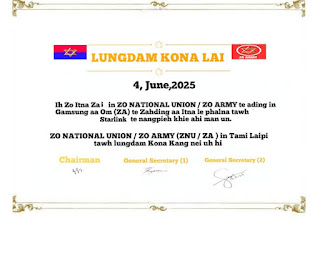
The 𝗭𝗼 𝗡𝗮𝘁𝗶𝗼𝗻𝗮𝗹 𝗨𝗻𝗶𝗼𝗻 - 𝗭𝗼 𝗔𝗿𝗺𝘆 extends heartfelt gratitude to all who have supported 𝗭𝗡𝗨 in its mission to serve the 𝗭𝗼 nation and 𝗭𝗼 people. We are thrilled to announce that 𝗭𝗡𝗨 now has 𝗦𝘁𝗮𝗿𝗹𝗶𝗻𝗸 connectivity, marking a significant milestone in our journey.
𝙕𝙊 𝙉𝘼𝙏𝙄𝙊𝙉𝘼𝙇 𝙐𝙉𝙄𝙊𝙉
𝙶𝙾𝚅𝙴𝚁𝙽𝙼𝙴𝙽𝚃 𝙾𝙵 𝚉𝙾𝙶𝙰𝙼
𝗔𝗿𝗶𝘀𝗲 𝗭𝗢 𝗡𝗮𝘁𝗶𝗼𝗻
𝙕𝙊 𝙉𝘼𝙏𝙄𝙊𝙉𝘼𝙇 𝙐𝙉𝙄𝙊𝙉
𝙶𝙾𝚅𝙴𝚁𝙽𝙼𝙴𝙽𝚃 𝙾𝙵 𝚉𝙾𝙶𝙰𝙼
𝗔𝗿𝗶𝘀𝗲 𝗭𝗢 𝗡𝗮𝘁𝗶𝗼𝗻
Thursday, June 5, 2025
To Ashang Kasar & Sapamcha Judumani

To,
1. Ashang Kasar & Indigenous People's Forum, Manipur (IPFM)
&
2. Sapamcha Judumani &
Federation of Haomee
(FoH),
SUBJECT: To check Indian Parliament Sessions 1973 & 1974 Questions and Answers and stop barking at Kukis.
Indian Parliament: LOK SABHA: Question - 1974: Shri. Pilloo Mody, Minister of External Affairs, Lok Sabha.
"Whether the Burmese Government have agreed to give Compensations to persons of Indian Origin who were forced to leave that country (Burma) without their belongings??"
eparlib.nic.in
https://eparlib.sansad.in
Parliament Digital Library: Repatriation of Indians from Burma
2 Aug 2024 — Title: Repatriation of Indians from Burma. Type: Part 1(Questions And Answers). Date: 7-Sep-1964. Language: Original.
Courtesy: WKZIC-GHQ
1. Ashang Kasar & Indigenous People's Forum, Manipur (IPFM)
&
2. Sapamcha Judumani &
Federation of Haomee
(FoH),
SUBJECT: To check Indian Parliament Sessions 1973 & 1974 Questions and Answers and stop barking at Kukis.
Indian Parliament: LOK SABHA: Question - 1974: Shri. Pilloo Mody, Minister of External Affairs, Lok Sabha.
"Whether the Burmese Government have agreed to give Compensations to persons of Indian Origin who were forced to leave that country (Burma) without their belongings??"
eparlib.nic.in
https://eparlib.sansad.in
Parliament Digital Library: Repatriation of Indians from Burma
2 Aug 2024 — Title: Repatriation of Indians from Burma. Type: Part 1(Questions And Answers). Date: 7-Sep-1964. Language: Original.
Courtesy: WKZIC-GHQ
UZO GHQ leh ZOMI COUNCIL kithukimna

Force in don le kaih Zoutu Zouta Tung a um theilou ding. Mimal lemsahna le deitelna zatat ding
✍️ The People Voices
4th June 2025
KITHUKIMNA
Date 02/06/25
Tuni June 2 2025 (Monday) ni, dak 3:30pm in Lower Singngat khua Fund dong na toh kisai a complaint ana kibawl (GD entry) thu Zomi Council leh United Zou Organisation (UZO) GHQ palaiten ki houkhawmna a ki nei a, thu lemlou umteng genkhawm in suhfel a hita jiah in complaint umpen lahkhiat a hi ta.
Tua a hina ah, hithu toh isai a koitobang mimal a ki theisiam louna leh
kimu siamlouna um nonlou ding in thukimna bawl a hi ta hi.
Tu dinmun et in, ZC leh UZO GHQ in membership fund ki dong na ah,
mimal lemsakna leh deitelna zatat tua a pei ding hoi sah a hi.
(PAUNEIHLAL)
Gen. Secretary
Zomi Council
(CHINKHENPAU)
Gen.Secretary
UZO-GHQ
KITHUKIMNA
Date 02/06/25
Tuni June 2 2025 (Monday) ni, dak 3:30pm in Lower Singngat khua Fund dong na toh kisai a complaint ana kibawl (GD entry) thu Zomi Council leh United Zou Organisation (UZO) GHQ palaiten ki houkhawmna a ki nei a, thu lemlou umteng genkhawm in suhfel a hita jiah in complaint umpen lahkhiat a hi ta.
Tua a hina ah, hithu toh isai a koitobang mimal a ki theisiam louna leh
kimu siamlouna um nonlou ding in thukimna bawl a hi ta hi.
Tu dinmun et in, ZC leh UZO GHQ in membership fund ki dong na ah,
mimal lemsakna leh deitelna zatat tua a pei ding hoi sah a hi.
(PAUNEIHLAL)
Gen. Secretary
Zomi Council
(CHINKHENPAU)
Gen.Secretary
UZO-GHQ
Wednesday, June 4, 2025
The British Map of Kuki Country (1904)

Historically, the British recognized tribes living in Western Myanmar, Northeast India, and Bangladesh's Chittagong Hill Tracts as Kukis in the 1720s. The region was mapped as the British Map of Kuki Country or Kukiland and formalized in 1904, later acknowledged by the United Nations. So it cannot be called Zoland, Zalengam or Zogam at any cost.
Only Bangladesh, India, and Myanmar can cede these lands based on recorded history. The US and UN can determine the formation of a separate Kuki country, grounded in British records and Kuki history.
Kuki country is our rightful political heritage, yet political sovereignty can only be settled in accordance with the 1969 UN declaration. Any further attempts to regain and restore pre-colonial sovereignty without the rightful name 'Kuki' will be void and null.
The 1904 British Map of Kukiland cannot be reclaimed through violent means or under the name 'Zo'. Instead, it requires collaboration with the United Nations Human Rights, solely under the name 'Kuki'.
Mizoram CM Pu Lalduhoma's attempts to create a country using 'Zo' are misguided and echo former CM Laldenga's failed endeavors to claim Kuki country in the 1960s. Any attempts to claim the land under a name other than Kuki will be futile.
In fact, 'Zo' is derived from 'Mizo', making it impossible to term Kuki and Chin as 'Zo'. All tribes within the British Map of Kuki Country are indeed Kukis.
Long live the Kuki Nation!
~ Kimneihoi Haokip (Kukiand Media)
Kukiland: Facebook page
Clarification from NSCN-IM

Clarification from NSCN-IM (Eastern Flank) to the wild allegations made by PS Haokip, president KNO/KNA-B.
Tuesday, June 3, 2025

Zo lady San Dim receives Masters in Healthcare

Lungdam pina ( Congratulations )
Pa Hang Lien Pau leh Nu, Vung Aih Nieng te tanu taa pen ahi Lie, Ciin San Dim in 2025 sung in Westen Kentucky University college pan Masters in Healthcare Administration and certificate in global health administration hing man theih ahi man in United Kentucky Zo Organization EC lam pan kipah na leh ki aang tang sah kang khang vuh hi.
We extend our sincerest congratulations to Ms. Ciin San Dim on successfully earning a Master's in Healthcare Administration and a Certificate in Global Health Administration in 2025. This remarkable achievement reflects Ms. Dim's dedication and commitment to advancing healthcare leadership.
Pa Hang Lien Pau leh Nu, Vung Aih Nieng te tanu taa pen ahi Lie, Ciin San Dim in 2025 sung in Westen Kentucky University college pan Masters in Healthcare Administration and certificate in global health administration hing man theih ahi man in United Kentucky Zo Organization EC lam pan kipah na leh ki aang tang sah kang khang vuh hi.
We extend our sincerest congratulations to Ms. Ciin San Dim on successfully earning a Master's in Healthcare Administration and a Certificate in Global Health Administration in 2025. This remarkable achievement reflects Ms. Dim's dedication and commitment to advancing healthcare leadership.
Khut khial te toh ki houlem u

Lamka, June 3: Khatveinitah in Thingkangphai oilpump gei a vangsiat huaitah in CRPF te gari in Unaupa(L)Thangsuanhau Zou phulum kha ua,Tuana KKL,ZYO leh mipi phattuam ngai te'n amun lang del pei un buaipi ngal uhi.
Tuanah khutkhial CRPF te Jong moh kahi u chin hing ki nuailut, surrender un Jing a kihoutha ding chin kithukim ua..
Jani'n khutkhial tu CRPF te Jong ipu pa tawndan in vohkhat gou in Inn lutna singpi,bawngnawi khai in hing lut uhi. Tuanah UZO,ZYO leh innsung mite leh munluo phungpi toh kihou na nei un,shina tuah (L) Thangsuanhau Zou nu in i Christian hi na toh tup mong a kiphulum hilou chi theisiam in Jesu Christ min in ngaidam hi.tuabanah apapi in jong tupmong hilou chi theisiam in CRPF CO pa kung a Jong driver pa sajai/punishment na piah lou ding u ahi chin request bawl nalai chi thu kimu hi.
Tuanah CRPF te Jong kisuangla pum pum in shiluang Zoupuanlaisan toh tuam un,Gaal na in dangka 1lakhs pia ua,gari pen Jong atha kahing piah ding un,asepna service lang a Jong ka buaipi ding u hi chi uhi.
Huchin innsungmite deina bang in kihoulem thei uhi...I biah PASIAN Jesu Christ min a ki ngaidam thei pen athupi pen ahi..
Jani'n ZYO Lamkaihna in i sanggampa u luang hospital morgue apat a inn mun a puah tung ahi ta a, tuni'n a vuilliam hi ta ding hi.
Tuanah khutkhial CRPF te Jong moh kahi u chin hing ki nuailut, surrender un Jing a kihoutha ding chin kithukim ua..
Jani'n khutkhial tu CRPF te Jong ipu pa tawndan in vohkhat gou in Inn lutna singpi,bawngnawi khai in hing lut uhi. Tuanah UZO,ZYO leh innsung mite leh munluo phungpi toh kihou na nei un,shina tuah (L) Thangsuanhau Zou nu in i Christian hi na toh tup mong a kiphulum hilou chi theisiam in Jesu Christ min in ngaidam hi.tuabanah apapi in jong tupmong hilou chi theisiam in CRPF CO pa kung a Jong driver pa sajai/punishment na piah lou ding u ahi chin request bawl nalai chi thu kimu hi.
Tuanah CRPF te Jong kisuangla pum pum in shiluang Zoupuanlaisan toh tuam un,Gaal na in dangka 1lakhs pia ua,gari pen Jong atha kahing piah ding un,asepna service lang a Jong ka buaipi ding u hi chi uhi.
Huchin innsungmite deina bang in kihoulem thei uhi...I biah PASIAN Jesu Christ min a ki ngaidam thei pen athupi pen ahi..
Jani'n ZYO Lamkaihna in i sanggampa u luang hospital morgue apat a inn mun a puah tung ahi ta a, tuni'n a vuilliam hi ta ding hi.
Monday, June 2, 2025
THANGNANG SHAWL AVAILABLE

Thangnang pon anklet - 6pairs available for rent only at
Contact 📞 📲 @ Haominlal , 919366794283
#Thadou-attire #kuki #beingkuki #thadoukuki
~ KUKI TIMES📫
Contact 📞 📲 @ Haominlal , 919366794283
#Thadou-attire #kuki #beingkuki #thadoukuki
~ KUKI TIMES📫
Kuki Migration into Kabaw Valley (1956-1966) & Repatriation of 1500 Kukis (1967)

"As on 14th December 1973, Government of India had Repatriated 1,96,843 Indians from Burma into India".
By:-
By:-
Dr. TS Haokip. WKZIC-GHQ,
Background: Ethnic tribal Kukis who originally called themselves Manmasi were later known as Khongjai by the Meiteis. The colonial British authorities came to call them as Kuki during the 18th and 19th centuries. The Kukis basically inhabited their territory which G.A Grierson 1904 documented as 'Kuki Country' (Linguistic Survey of India, Part III, Vol. III). When the Kuki Ancestral Land was trifurcated into India in 1947, Burma in 1948 and East Pakistan @ Bangladesh in 1972, the tribal Kukis became minority among minorities in these three countries, enduring persecutions, discriminations and subjugations from larger and stronger communities for the greed of their land. In order to defend themselves and their land, the Kukis endured conflict with neighbouring communities and authorities time to time, starting with Chittagong during 1770s, Tipra (Tripura) during 1860-61, Indian sub-continent during 1917-1919 against the British, Indian Independence Movement under Indian National Army (INA) during 1942-45, Coldwar during 1956-1966 from NNC-TR, 1967 Khadawmi Operation in Burma, 1993-1997 Kuki ethnic Cleansing by NSCN-IM and Kuki Genocide 2023-25 in Manipur by Meiteis.
1. A Glance of Kuki Population of Manipur from 1881- 1951: 1881 Census - 25,324, 1901 Census - 28,000, 1911 Census - 44,431, 1921 Census - 66,255, 1931 Census - 79,066, 1941 Census - IIWW, 1951 Census for Manipur - 1,00,748 (Source: Census of India 1951 for Manipur, Assam & Tripura: Inclusive of all Clans & tribes under Any Kuki). Additionally, there were 1,08,282 Kukis in 1931 Census for Kukis of Assam & Bengal, (Source: Purums: An Old Kuki tribe of Manipur by TC Das, 1945, University of Calcutta).
2. Kuki Migration Into Kabaw Valley (1956-1966): Large scale influxed and migration of Kukis into KANGMANGPHAI or Kabaw Valley of Burma during 1956 to 1966 from Manipuri Naga dominated areas of Manipur at the fear of NNC-Tangkhul Region's hostile militancy in Manipur from 1956 alarmed the Government of Burma who initiated a sort of NRC known as 'Khadawmi Operation 1967" to flush out Indians migrating into Burma. The operation had effected many Kuki villages, after identifying Indian Kukis and Burmese Kukis in the region, President Ne Win talked with Prime Minister Smt. Indira Gandhi, and Indian citizen Kukis were officially repatriated into India by Government of India (GoI) through negotiations between Government of India and Burma respectively. The Government of India was very much awared that those Kukis suffered because of NNC-TF and willingly repatriated its people in 1967.
These repatriated Indian Kukis were provided Relief materials by the Government of India for 2/3 years. Here comes the point that the group that threatened and killed 60 Kuki chiefs, leaders and educated youths and uprooted their 46 villages during 1956-1966, began to invent the term "Refugees" and tagged the Kuki as 'Refugees' who were repatriated/ brought back into their land by the Government of India in 1967, with the support of Burmese President, General Ne Win. _
Here is an excerpt of one Kuki village in 1956 among numerous, called 'Thenjang village' headed by Chief Pu Kaikhothang Kipgen (Singkhom Bulpipa), and neighbouring 'Saichang Village' headed by Pu Jamkholun Kipgen, had settled in the region long time ago, in 'Chingai Sub-Division' of Ukhrul district, Manipur abandoned their village as they could no longer tolerate the ill treatments and hostilities of NNC-TF compelled them to migrate under the leaderships of a committee members: Chairman: Pu. Onkhokhai, Vice-Chairman: Pu. Onjaneh, Secretary: Pu. Ngamkhosat and Asst. Secretatry: Pu. Shochung, alongwith other 14 Executive Members as:
1) Pu. Onkhokhai, 2) Pu. Shokhongam, 3) Pu.Thangso, 4) Pu. Jamkholim,
5) Pu. Shochung, 6) Pu. Jampao, 7) Pu. Thangkholim, 8) Pu. Seikhojang,
9) Pu.Thangkhosat, 10) Pu. Demkhotong, 11) Pu. Jamkholam, 12) Pu. Thangjangam, 13) Pu. Letkhohen, 14) Pu. Paokhosat respectively by throwing a "Farewell Feast" by slaughtering a Mithun and resolved to migrate into Kabaw Valley which is not very far from Ukhrul . As per resolved in 1956 meeting, the village arranged fooding and clothings to migrate and left UKHRUL in 1957 and migrated to the site, which the 3 member team under the leadership of Pu. Onkhokhai with Pu. Letkhohen and Pu. Helngam chose to settle in Kabaw Valley of Burma at 'Tongkyo', (Source: Ngamkhothang Kipgen, Teiyang, Myanmar).
During the said period, altogether 46 Kuki villages were abandoned one after another and scattered in different places, and 60 Kuki chiefs, leaders and educated youths were assassinated which were officially recorded in a document with names of villages and year of dissertation, and names of persons and year of assassination, (WKP, Pp. 266-268) respectively. Another ugly inhumane, man-made catastrophe was 1993-1997 where remaining 360 Kuki villages from Ukhrul, Senapati and Tamenglong districts were burnt down and uprooted, leaving 1149 innocent Kuki women, children, elderly and invalids butchered in the most cruel cold blood, and rendering 1 lakh Kukis internally displaced._
3. *Repatriation of 1,96,843 Indians from Burma including 1500 Indian Kukis in 1967*
The Government of India, as on 14th December 1973, had all together repatriated 1,96,843 (One lakh, ninety six thousand, eight hundred and forty three) Indians from Burma, [(Source: Agrahayana 29, 1895 (SAKA), 1973)]. The committee for 'Compensation for Indian Repatriates from Burma' consisted of Smt. Indira Gandhi (Prime Minister), Shri. Hardayal Devgun, Shri. Ram Swarup, Shri. Bharat Singh Chowhan, Shri. Molahu Prasad and Shri. M. Narayan Reddy respectively. According to reports in respect of journeys by ship from the Embassy of of India, Yangoon and journeys by air from the Government of West Bengal upto 14th December 1973, 1,96,843 persons have been repatriated from Burma to India so far, air repatriates were allowed foreign exchange of Rs. 37.50 for adults and lesser amounts
for dependents and children. Sea repatriates who pay their fares were allowed Rs. 25/- per adult and Rs. 15/- per child. Repatriates who were granted free passage were allowed Rs. 15/- per adult generally.
a) _The number of Indians who have come back from Burma so far and the amount which each of them was allowed to bring with him._
b) _The arrangements made by the Government for their rehabilitation giving the details of arrangements made by the Government for the rehabilitation of repatriates from Burma was laid on the table of the Sabha._
c) _Rehabilitations include loans for purchasing plots, construction of houses, business establishments, agricultural loans, educational loans, book grants, educational concessions and stipends etc._
d) _About 2 lakh repatriate Indians, most of them were mostly from the states of Tamil Nadu, Mysore, Madhya Pradesh, Bihar and Uttar Pradesh respectively, and 1,500 Indian origin Kukis were among those Indians who were taken back by the Government of India from Burma._
_To shorten, till date 'Kuki Hatred Campaign' has been continuing in various social media such as whatsapp, facebook, video clips, public speeches, pamplets etc etc. Is it not enough that such large numbers of villages numbering altogether 46 + 360 = 506 Kuki villages already been uprooted and 60+ 1140 =1200 innocent Kuki people have already been killed, and more than 1 lakh had already been chased out, and those displaced people taking refuge in other Kuki dominated districts, and re-establishing their new villages were again narrated as immigrants entering Churachandpur, Tengnoupal and Kangpokpi districts. What is this ?? Everything has a limit._
_It is high time for both Kukis and Manipuri Nagas to be vigil and alert, not to be taken away by such evil minded campaigners with a slogan, "WAKE UP ! WAKE UP !!" by advocates of 'Blood & War' between different communities. Is it still not enough in the above stated lost of Kuki lives and lands, to avenge the 'Head Hunting' era episodes taking place to defend a weaker Tankhool who sought protections against the stronger attacking Tankhool ?? All right thinking should retrospect both sides of head hunting era incidents, keeping in mind Kukis were and are not head hunters. Kukis had been and shall never thirst for human blood and head except for defending own blood and head, in case of attempted to. The yearnings for blood and head must be rid off atleast at this digital and scientific era to 'live and let live'._
_It is therefore earnestly suggested to kindly read in between lines the underlying 12 (twelve) books written by non-Kuki, National and International writers about Kukis to know about Kuki people, so as not to strike again and again another 'matchstick' to burn again Kuki-Manipuri Naga fellow tribal Christians for the second time, to uphold the teachings of Christs not to demean Christianity infront of non-believers._
4). *INDIGENOUS KUKIS OF INDIAN SUB-CONTINENT: INDIA, MYANMAR (BURMA) AND BANGLADESH"*
i) *The Encyclopedia Britannica* _(Vol.13, P.511) states 'KUKI' a name given to a group of tribes inhabiting both sides of the mountains dividing Assam and Bengal from Burma, south of the Nantaleik River. A more detailed geographical account of 'Kuki Country' given by G.A Grierson (Tibeto-Burman Family: Specimens of the Kuki-Chin and Burma Groups, Linguistic Survey of India, Volume III, Part III), published by the office of the Superintendant Government Printing Press, India, Calcutta 1904, can be refered at the stated documented book._
ii) *Historians: Majumdar and Bhattasali*_(1930, Pp. 6-7) stated the 'Kukis' as one of the earliest races to have lived in Pre-historic India, preceeding the 'Dravidians' who have now settled in South India. The Aryans who drove the Dravidians towards the south arrived in the Indian sub-continent around BC 1500 (Thapar, 1996, P. 29)._
iii) *Prof. JN Phukan* _(1992, P.2) wrote, If we were to accept Ptolemy's Tiladae as the Kuki people as identified by Gereni, the settlement of the Kuki people in the northeast India would go back long, long time back._
iv) *Geographer Claudius Ptolemy*_in the second century (AD 90-168) identified the Kukis with the Tiladae who are associated with the Tilabharas and placed them to the north of Maiandros about Garo Hills and Sylhet (Gereni, 1909, P. 53)._
v) *Mizo History* _(Series III, 1993) stated that during the era from BC 700 to 30 AD, the Kuki people called themselves as Manmasi (Manmasis). Mention may be made of the first Manmasi Khongsai (Khongjai) Chieftaindom under Chieftain Chongphut@ Chongpu from BC 19-70 AD, (Kuki-Meitei Connection & Relationship, 2010)._
vi) *Stevenson* _(1932)'s references to the Kukis in relation to Ptolemy's 'The Geography' bears critical significance to its period of Kuki existence. According to Dalton (Dalton, 1872, P.10), Shiva is quoted to have fallen in love with a Kuki woman around AD 1512._
vii) _*Dalton*, (1872, P. 10) stated that the present state of Tripura has been one of the Ancestral territories of the Kukis since time immemorial. There are 16 Kuki sub-tribes under Kuki nomenclature constituted under 'Tripura Hallam-Kuki Socio-Culture and Linguistic Organisation' (THKSCALO)._
viii) *Prof. Gangmumei Kabui,*_(History of Manipur, p. 24), mentioned as 'Some Kuki tribes migrated in the Manipur Hills during Pre-historic times along with or after the Meitei advent in the Manipur valley'._
ix) *Encyclopedia Britannica:*_(Meitei People Encyclopedia Britannica @ https//www.brittanica.com) states that the present Manipur Hill area was once inhabited by peoples resembling such as hill tribes as the Naga and the Mizo Kuki, with Meitei also spelled Meetei or Meithei/ Meilhei also called Manipuri, dominant population of Manipur in north eastern India in the valley._
x) *T.C Hodson*(The Meitheis,1908, P.100) and William Shaw (The Thadou Kukis, 1929, Pp. 47 & 480) states that Lairen Pakhangba, ancestor of the Ningthouja clan of the Meitheis (Meiteis) was the son of a Kuki woman by the name of Lenghoi @ Nungmaidenga of the Chohte clan of the Kukis and a Snake (Lairen).
xi) _The book 'Kuki Hills in Kanglei Manipur' (1852-1949) and "Meitei Ningthourol: Genealogy of Meitei Kings" by Sarangthem Bormani Singh have documented some of the Kuki Chiefdoms of Kuki Hills, former Khongjai Hills (1741-42), during BC 90 to 30 AD, who were originally called as Manmasi, were later called as Khongjai and finally known and recorded by colonial writers as Kuki during the 18th and 19th centuries such as:_
i) Chothe Chiefdom, (Chothe),
ii) Thayong Chiefdom, (Kom,
iii) Maring Chiefdom, (Pawi/ Lai),
iv) Kharam Chiefdom, (Maram),
v) Molpi (Mombi) Chiefdom,(Haokip)
vi) Chahsat (Chassad) Chiefdom, (Haokip)
vii) Tonghu (Tonglhu Haokip) Chiefdom,
viii) Tayaang Chiefdom (Kipgen),
ix) Mapao Chieftaindom (Mapao tribe now converted into Tangkhul),
x) Makeng Chiefraindom, (Thangal),
xi) Langmai Chieftaindom, (Assimiliated Chothe Clansmen) respectively. (The History of Kuki Hills in Kanglei Manipur, 2010 & Meitei Ningthourol: Genealogy of Meitei Kings" by Sarangthem Bormani Singh).
xii) _*Wangkhemcha Chingtamlen* (Discovery of Kangleipak, 2011, P.20-21), stating the group of people called "Lai" people 'settled many many thousand years on the Koubru (Koupulu) mountain ranges… near Saitu village Kanggui (Kangpokpi), as Meitei people who later in the 18th century migrated into Imphal valley as Meitei people', were not Meiteis, but on ethinicity and by blood are the Kuki-Chin people categorised as old Kukis by colonial writers. Many of this Lai people are there in Lawngtlai district in Mizoram under 'Lai Autonomous District Council' (LADC) and Falam, Thantlang and Hakha in Chinstate of Myanmar._
*Conclusion:* _It is clear from the census records available starting from 1881 to the present that ethnic Kukis are as much indigeneous with other communities in the regions they inhabited, and terming them as immigrants or refugees are merely out of jealousy and greed for their lands. Any individual who are still confused with the indigeneity of the Kukis may once again refer the statistical data of 1881 Census with 25,324 Kuki population in Manipur, 28,000 in 1901 census, 44,431 in 1911 Census , 66,255 in 1921 census, 79,066 in 1931 census, (no census in 1941 due to II World War), and 1,00,748 Kuki populations in 1951 Census for Manipur (Source: Census of India 1951 for Manipur, Assam & Tripura: Inclusive of all Clans & tribes under Any Kuki). It is also to note that there were 1,08,282 Kuki populations for Assam and Bengal in 1931, (Source: Purums: An Old Kuki tribe of Manipur by TC Das, 1945, University of Calcutta)._
The 1st June 2025.
Background: Ethnic tribal Kukis who originally called themselves Manmasi were later known as Khongjai by the Meiteis. The colonial British authorities came to call them as Kuki during the 18th and 19th centuries. The Kukis basically inhabited their territory which G.A Grierson 1904 documented as 'Kuki Country' (Linguistic Survey of India, Part III, Vol. III). When the Kuki Ancestral Land was trifurcated into India in 1947, Burma in 1948 and East Pakistan @ Bangladesh in 1972, the tribal Kukis became minority among minorities in these three countries, enduring persecutions, discriminations and subjugations from larger and stronger communities for the greed of their land. In order to defend themselves and their land, the Kukis endured conflict with neighbouring communities and authorities time to time, starting with Chittagong during 1770s, Tipra (Tripura) during 1860-61, Indian sub-continent during 1917-1919 against the British, Indian Independence Movement under Indian National Army (INA) during 1942-45, Coldwar during 1956-1966 from NNC-TR, 1967 Khadawmi Operation in Burma, 1993-1997 Kuki ethnic Cleansing by NSCN-IM and Kuki Genocide 2023-25 in Manipur by Meiteis.
1. A Glance of Kuki Population of Manipur from 1881- 1951: 1881 Census - 25,324, 1901 Census - 28,000, 1911 Census - 44,431, 1921 Census - 66,255, 1931 Census - 79,066, 1941 Census - IIWW, 1951 Census for Manipur - 1,00,748 (Source: Census of India 1951 for Manipur, Assam & Tripura: Inclusive of all Clans & tribes under Any Kuki). Additionally, there were 1,08,282 Kukis in 1931 Census for Kukis of Assam & Bengal, (Source: Purums: An Old Kuki tribe of Manipur by TC Das, 1945, University of Calcutta).
2. Kuki Migration Into Kabaw Valley (1956-1966): Large scale influxed and migration of Kukis into KANGMANGPHAI or Kabaw Valley of Burma during 1956 to 1966 from Manipuri Naga dominated areas of Manipur at the fear of NNC-Tangkhul Region's hostile militancy in Manipur from 1956 alarmed the Government of Burma who initiated a sort of NRC known as 'Khadawmi Operation 1967" to flush out Indians migrating into Burma. The operation had effected many Kuki villages, after identifying Indian Kukis and Burmese Kukis in the region, President Ne Win talked with Prime Minister Smt. Indira Gandhi, and Indian citizen Kukis were officially repatriated into India by Government of India (GoI) through negotiations between Government of India and Burma respectively. The Government of India was very much awared that those Kukis suffered because of NNC-TF and willingly repatriated its people in 1967.
These repatriated Indian Kukis were provided Relief materials by the Government of India for 2/3 years. Here comes the point that the group that threatened and killed 60 Kuki chiefs, leaders and educated youths and uprooted their 46 villages during 1956-1966, began to invent the term "Refugees" and tagged the Kuki as 'Refugees' who were repatriated/ brought back into their land by the Government of India in 1967, with the support of Burmese President, General Ne Win. _
Here is an excerpt of one Kuki village in 1956 among numerous, called 'Thenjang village' headed by Chief Pu Kaikhothang Kipgen (Singkhom Bulpipa), and neighbouring 'Saichang Village' headed by Pu Jamkholun Kipgen, had settled in the region long time ago, in 'Chingai Sub-Division' of Ukhrul district, Manipur abandoned their village as they could no longer tolerate the ill treatments and hostilities of NNC-TF compelled them to migrate under the leaderships of a committee members: Chairman: Pu. Onkhokhai, Vice-Chairman: Pu. Onjaneh, Secretary: Pu. Ngamkhosat and Asst. Secretatry: Pu. Shochung, alongwith other 14 Executive Members as:
1) Pu. Onkhokhai, 2) Pu. Shokhongam, 3) Pu.Thangso, 4) Pu. Jamkholim,
5) Pu. Shochung, 6) Pu. Jampao, 7) Pu. Thangkholim, 8) Pu. Seikhojang,
9) Pu.Thangkhosat, 10) Pu. Demkhotong, 11) Pu. Jamkholam, 12) Pu. Thangjangam, 13) Pu. Letkhohen, 14) Pu. Paokhosat respectively by throwing a "Farewell Feast" by slaughtering a Mithun and resolved to migrate into Kabaw Valley which is not very far from Ukhrul . As per resolved in 1956 meeting, the village arranged fooding and clothings to migrate and left UKHRUL in 1957 and migrated to the site, which the 3 member team under the leadership of Pu. Onkhokhai with Pu. Letkhohen and Pu. Helngam chose to settle in Kabaw Valley of Burma at 'Tongkyo', (Source: Ngamkhothang Kipgen, Teiyang, Myanmar).
During the said period, altogether 46 Kuki villages were abandoned one after another and scattered in different places, and 60 Kuki chiefs, leaders and educated youths were assassinated which were officially recorded in a document with names of villages and year of dissertation, and names of persons and year of assassination, (WKP, Pp. 266-268) respectively. Another ugly inhumane, man-made catastrophe was 1993-1997 where remaining 360 Kuki villages from Ukhrul, Senapati and Tamenglong districts were burnt down and uprooted, leaving 1149 innocent Kuki women, children, elderly and invalids butchered in the most cruel cold blood, and rendering 1 lakh Kukis internally displaced._
3. *Repatriation of 1,96,843 Indians from Burma including 1500 Indian Kukis in 1967*
The Government of India, as on 14th December 1973, had all together repatriated 1,96,843 (One lakh, ninety six thousand, eight hundred and forty three) Indians from Burma, [(Source: Agrahayana 29, 1895 (SAKA), 1973)]. The committee for 'Compensation for Indian Repatriates from Burma' consisted of Smt. Indira Gandhi (Prime Minister), Shri. Hardayal Devgun, Shri. Ram Swarup, Shri. Bharat Singh Chowhan, Shri. Molahu Prasad and Shri. M. Narayan Reddy respectively. According to reports in respect of journeys by ship from the Embassy of of India, Yangoon and journeys by air from the Government of West Bengal upto 14th December 1973, 1,96,843 persons have been repatriated from Burma to India so far, air repatriates were allowed foreign exchange of Rs. 37.50 for adults and lesser amounts
for dependents and children. Sea repatriates who pay their fares were allowed Rs. 25/- per adult and Rs. 15/- per child. Repatriates who were granted free passage were allowed Rs. 15/- per adult generally.
a) _The number of Indians who have come back from Burma so far and the amount which each of them was allowed to bring with him._
b) _The arrangements made by the Government for their rehabilitation giving the details of arrangements made by the Government for the rehabilitation of repatriates from Burma was laid on the table of the Sabha._
c) _Rehabilitations include loans for purchasing plots, construction of houses, business establishments, agricultural loans, educational loans, book grants, educational concessions and stipends etc._
d) _About 2 lakh repatriate Indians, most of them were mostly from the states of Tamil Nadu, Mysore, Madhya Pradesh, Bihar and Uttar Pradesh respectively, and 1,500 Indian origin Kukis were among those Indians who were taken back by the Government of India from Burma._
_To shorten, till date 'Kuki Hatred Campaign' has been continuing in various social media such as whatsapp, facebook, video clips, public speeches, pamplets etc etc. Is it not enough that such large numbers of villages numbering altogether 46 + 360 = 506 Kuki villages already been uprooted and 60+ 1140 =1200 innocent Kuki people have already been killed, and more than 1 lakh had already been chased out, and those displaced people taking refuge in other Kuki dominated districts, and re-establishing their new villages were again narrated as immigrants entering Churachandpur, Tengnoupal and Kangpokpi districts. What is this ?? Everything has a limit._
_It is high time for both Kukis and Manipuri Nagas to be vigil and alert, not to be taken away by such evil minded campaigners with a slogan, "WAKE UP ! WAKE UP !!" by advocates of 'Blood & War' between different communities. Is it still not enough in the above stated lost of Kuki lives and lands, to avenge the 'Head Hunting' era episodes taking place to defend a weaker Tankhool who sought protections against the stronger attacking Tankhool ?? All right thinking should retrospect both sides of head hunting era incidents, keeping in mind Kukis were and are not head hunters. Kukis had been and shall never thirst for human blood and head except for defending own blood and head, in case of attempted to. The yearnings for blood and head must be rid off atleast at this digital and scientific era to 'live and let live'._
_It is therefore earnestly suggested to kindly read in between lines the underlying 12 (twelve) books written by non-Kuki, National and International writers about Kukis to know about Kuki people, so as not to strike again and again another 'matchstick' to burn again Kuki-Manipuri Naga fellow tribal Christians for the second time, to uphold the teachings of Christs not to demean Christianity infront of non-believers._
4). *INDIGENOUS KUKIS OF INDIAN SUB-CONTINENT: INDIA, MYANMAR (BURMA) AND BANGLADESH"*
i) *The Encyclopedia Britannica* _(Vol.13, P.511) states 'KUKI' a name given to a group of tribes inhabiting both sides of the mountains dividing Assam and Bengal from Burma, south of the Nantaleik River. A more detailed geographical account of 'Kuki Country' given by G.A Grierson (Tibeto-Burman Family: Specimens of the Kuki-Chin and Burma Groups, Linguistic Survey of India, Volume III, Part III), published by the office of the Superintendant Government Printing Press, India, Calcutta 1904, can be refered at the stated documented book._
ii) *Historians: Majumdar and Bhattasali*_(1930, Pp. 6-7) stated the 'Kukis' as one of the earliest races to have lived in Pre-historic India, preceeding the 'Dravidians' who have now settled in South India. The Aryans who drove the Dravidians towards the south arrived in the Indian sub-continent around BC 1500 (Thapar, 1996, P. 29)._
iii) *Prof. JN Phukan* _(1992, P.2) wrote, If we were to accept Ptolemy's Tiladae as the Kuki people as identified by Gereni, the settlement of the Kuki people in the northeast India would go back long, long time back._
iv) *Geographer Claudius Ptolemy*_in the second century (AD 90-168) identified the Kukis with the Tiladae who are associated with the Tilabharas and placed them to the north of Maiandros about Garo Hills and Sylhet (Gereni, 1909, P. 53)._
v) *Mizo History* _(Series III, 1993) stated that during the era from BC 700 to 30 AD, the Kuki people called themselves as Manmasi (Manmasis). Mention may be made of the first Manmasi Khongsai (Khongjai) Chieftaindom under Chieftain Chongphut@ Chongpu from BC 19-70 AD, (Kuki-Meitei Connection & Relationship, 2010)._
vi) *Stevenson* _(1932)'s references to the Kukis in relation to Ptolemy's 'The Geography' bears critical significance to its period of Kuki existence. According to Dalton (Dalton, 1872, P.10), Shiva is quoted to have fallen in love with a Kuki woman around AD 1512._
vii) _*Dalton*, (1872, P. 10) stated that the present state of Tripura has been one of the Ancestral territories of the Kukis since time immemorial. There are 16 Kuki sub-tribes under Kuki nomenclature constituted under 'Tripura Hallam-Kuki Socio-Culture and Linguistic Organisation' (THKSCALO)._
viii) *Prof. Gangmumei Kabui,*_(History of Manipur, p. 24), mentioned as 'Some Kuki tribes migrated in the Manipur Hills during Pre-historic times along with or after the Meitei advent in the Manipur valley'._
ix) *Encyclopedia Britannica:*_(Meitei People Encyclopedia Britannica @ https//www.brittanica.com) states that the present Manipur Hill area was once inhabited by peoples resembling such as hill tribes as the Naga and the Mizo Kuki, with Meitei also spelled Meetei or Meithei/ Meilhei also called Manipuri, dominant population of Manipur in north eastern India in the valley._
x) *T.C Hodson*(The Meitheis,1908, P.100) and William Shaw (The Thadou Kukis, 1929, Pp. 47 & 480) states that Lairen Pakhangba, ancestor of the Ningthouja clan of the Meitheis (Meiteis) was the son of a Kuki woman by the name of Lenghoi @ Nungmaidenga of the Chohte clan of the Kukis and a Snake (Lairen).
xi) _The book 'Kuki Hills in Kanglei Manipur' (1852-1949) and "Meitei Ningthourol: Genealogy of Meitei Kings" by Sarangthem Bormani Singh have documented some of the Kuki Chiefdoms of Kuki Hills, former Khongjai Hills (1741-42), during BC 90 to 30 AD, who were originally called as Manmasi, were later called as Khongjai and finally known and recorded by colonial writers as Kuki during the 18th and 19th centuries such as:_
i) Chothe Chiefdom, (Chothe),
ii) Thayong Chiefdom, (Kom,
iii) Maring Chiefdom, (Pawi/ Lai),
iv) Kharam Chiefdom, (Maram),
v) Molpi (Mombi) Chiefdom,(Haokip)
vi) Chahsat (Chassad) Chiefdom, (Haokip)
vii) Tonghu (Tonglhu Haokip) Chiefdom,
viii) Tayaang Chiefdom (Kipgen),
ix) Mapao Chieftaindom (Mapao tribe now converted into Tangkhul),
x) Makeng Chiefraindom, (Thangal),
xi) Langmai Chieftaindom, (Assimiliated Chothe Clansmen) respectively. (The History of Kuki Hills in Kanglei Manipur, 2010 & Meitei Ningthourol: Genealogy of Meitei Kings" by Sarangthem Bormani Singh).
xii) _*Wangkhemcha Chingtamlen* (Discovery of Kangleipak, 2011, P.20-21), stating the group of people called "Lai" people 'settled many many thousand years on the Koubru (Koupulu) mountain ranges… near Saitu village Kanggui (Kangpokpi), as Meitei people who later in the 18th century migrated into Imphal valley as Meitei people', were not Meiteis, but on ethinicity and by blood are the Kuki-Chin people categorised as old Kukis by colonial writers. Many of this Lai people are there in Lawngtlai district in Mizoram under 'Lai Autonomous District Council' (LADC) and Falam, Thantlang and Hakha in Chinstate of Myanmar._
*Conclusion:* _It is clear from the census records available starting from 1881 to the present that ethnic Kukis are as much indigeneous with other communities in the regions they inhabited, and terming them as immigrants or refugees are merely out of jealousy and greed for their lands. Any individual who are still confused with the indigeneity of the Kukis may once again refer the statistical data of 1881 Census with 25,324 Kuki population in Manipur, 28,000 in 1901 census, 44,431 in 1911 Census , 66,255 in 1921 census, 79,066 in 1931 census, (no census in 1941 due to II World War), and 1,00,748 Kuki populations in 1951 Census for Manipur (Source: Census of India 1951 for Manipur, Assam & Tripura: Inclusive of all Clans & tribes under Any Kuki). It is also to note that there were 1,08,282 Kuki populations for Assam and Bengal in 1931, (Source: Purums: An Old Kuki tribe of Manipur by TC Das, 1945, University of Calcutta)._
The 1st June 2025.
~ WKZIC
Sunday, June 1, 2025
New Delhi joins 15th National Animal Rights Day with a Powerful Local Gathering

Today, New Delhi stood in solemn solidarity with over 250 cities across 50+ countries, joining the 15th Annual National Animal Rights Day (NARD) — a global memorial and celebration for animals. The event was part of India's largest ever coordinated animal rights movement, with more than 45 Indian cities participating in this historic call for animal justice.
At Connaught Place, animal rights advocates from New Delhi came together for a powerful and emotional public tribute to the billions of animals who suffer and perish each year due to human activities — including factory farming, animal experimentation, entertainment, and the fashion industry.
#NationalAnimalRightsDay
#NARD15
At Connaught Place, animal rights advocates from New Delhi came together for a powerful and emotional public tribute to the billions of animals who suffer and perish each year due to human activities — including factory farming, animal experimentation, entertainment, and the fashion industry.
#NationalAnimalRightsDay
#NARD15
USA: Albert weds Emily
Thangkhal tangval khat leh Mangkaang nungak khat in Saptuam Dan Siangthou in kiteenna ana neih uh
Zani date 31.05.2025 Saturday/Kigini zinglam 10:30 AM in Tangval Albert Liansuanmung Suantak S/o Late Rev. Thanghaulian Suantak leh Nu Niangngaihching Suantak of Tuibuang Village in Saptuam Dan Siangthou in a it mah mah Emily Benson tawh a om na USA khuapi Florida ah, Grace Immanuel Bible Church ah Saptuam Pastor pa khut ah kiteenna hun lawhching takin ana zang uhi.
Thangkhal mi le sa ahih man in iki pak pih mah mah ua, maban ah nupa lawhching ahung hih diing uh i deihsak thu uh Khalvontawi tungtawn in igen uh ahi.
Zani date 31.05.2025 Saturday/Kigini zinglam 10:30 AM in Tangval Albert Liansuanmung Suantak S/o Late Rev. Thanghaulian Suantak leh Nu Niangngaihching Suantak of Tuibuang Village in Saptuam Dan Siangthou in a it mah mah Emily Benson tawh a om na USA khuapi Florida ah, Grace Immanuel Bible Church ah Saptuam Pastor pa khut ah kiteenna hun lawhching takin ana zang uhi.
Thangkhal mi le sa ahih man in iki pak pih mah mah ua, maban ah nupa lawhching ahung hih diing uh i deihsak thu uh Khalvontawi tungtawn in igen uh ahi.
KV NEWS
Pasian Tau GU Liang Te Maw A Khuazangbup A Kaangtum?

Sikkeu (spoon) GU
Bizu (almirah) GU
Kuang (plate) GU
Bel (pot) GU
Puan (cloth) GU
Puanza (shawl) GU
Lupna (bed) GU
Vanleng bel (allumn/coppr pot) GU
Tua bek hi lo, Pasian Tau (alter) GU uh hilai.
Hih Pasian Tau a GU te Nakzang khua RC pawlpi te hiliang aive!
©Nang Dal Lian
01-06-2025 | Sunday
Bizu (almirah) GU
Kuang (plate) GU
Bel (pot) GU
Puan (cloth) GU
Puanza (shawl) GU
Lupna (bed) GU
Vanleng bel (allumn/coppr pot) GU
Tua bek hi lo, Pasian Tau (alter) GU uh hilai.
Hih Pasian Tau a GU te Nakzang khua RC pawlpi te hiliang aive!
©Nang Dal Lian
01-06-2025 | Sunday
Manipur Guv visits flood affected areas

Hon'ble Governor of Manipur, Shri Ajay Kumar Bhalla, visited various flood-affected areas along the Imphal River this morning to assess the current situation. Key areas inspected included Kangla Nongpok Thong, Lairikyengbam Leikai and Singjamei Bridge.
The Governor was accompanied by senior state officials, including the Chief Secretary, Commissioner (Home) and Superintendent of Police (Imphal East). He directed officials to closely monitor the river situation and implement necessary pre-emptive measures.
Instructions have been issued to Deputy Commissioners to ensure timely evacuation and provide temporary relief to those affected. SDRF and NDRF teams are on alert and ready to respond.
#GovernmentOfManipur #ManipurFloods #DisasterResponse #GovernorManipur #PublicSafety
The Governor was accompanied by senior state officials, including the Chief Secretary, Commissioner (Home) and Superintendent of Police (Imphal East). He directed officials to closely monitor the river situation and implement necessary pre-emptive measures.
Instructions have been issued to Deputy Commissioners to ensure timely evacuation and provide temporary relief to those affected. SDRF and NDRF teams are on alert and ready to respond.
#GovernmentOfManipur #ManipurFloods #DisasterResponse #GovernorManipur #PublicSafety
Mizoram Leimin Ah Myanmar Raltlan Mizo Chhungkhu Mi- 3 An Thi

May 31st, 2025- Zofa Journal || Myanmar ram buai sa himna zawnga Chinland ram Zophai Kalay Towship Vutbuak Khua atanga India Mizoram Champha District Vaphai khua raltlan chhungkua Pakhat mi- 3 chu ruah tui leimin avangin tukin dar 4:15 AM khan van duai thlak tak maiin an boral thu hriat a ni.
He in a cheng mi pathum Lenkhuaithanga (71), a fanu Lalneihṭhuami (48) leh Lalneihṭhuami fapa, Pekhmingthanga nupui Lalramniengi (34) nau thla 4 mi pai mekte chu leimin hian hnawlin an thi a, Pekhmingthanga leh an mikhual Lalzama te erawh an tlanchhuak hman a ni.
Ruahtui leimin avangin Mizoram hmun tinah chhiatna rap thlak a thleng meka tawngtai pui an ngai hle a ni.
#Zofajournal
#zofajournal
He in a cheng mi pathum Lenkhuaithanga (71), a fanu Lalneihṭhuami (48) leh Lalneihṭhuami fapa, Pekhmingthanga nupui Lalramniengi (34) nau thla 4 mi pai mekte chu leimin hian hnawlin an thi a, Pekhmingthanga leh an mikhual Lalzama te erawh an tlanchhuak hman a ni.
Ruahtui leimin avangin Mizoram hmun tinah chhiatna rap thlak a thleng meka tawngtai pui an ngai hle a ni.
#Zofajournal
#zofajournal
MANIPUR BJP LEGISLATORS: PRESS RELEASE

Statement by BJP Legislators of Manipur on the Way Forward for Peace and Normalcy
♕Miss World 2025 Di’n Thailand Nungak😍

01/06/2025 (Sun):* Miss World 72vei teelna [Grand Finale], zan [Kiginni] nitak in Hyderabad, Telangana a HITEX Exhibition Centre ah neih in om hi.
Miss Thailand *Opal Suchata Chuangsri* in gam tuam² nungak nalh leh pil tak² kisutuah 108 lak ah vualzohna tang in, *Miss World 2025* di'n puan' in om a, _crown♕_ khu in kilehkik hi. Thailand in Miss World aneih masakna pen uh hingal hi.
©𝐙𝐨𝐠𝐚𝐦 𝐈𝐧𝐒𝐢𝐠𝐡𝐭
Miss Thailand *Opal Suchata Chuangsri* in gam tuam² nungak nalh leh pil tak² kisutuah 108 lak ah vualzohna tang in, *Miss World 2025* di'n puan' in om a, _crown♕_ khu in kilehkik hi. Thailand in Miss World aneih masakna pen uh hingal hi.
©𝐙𝐨𝐠𝐚𝐦 𝐈𝐧𝐒𝐢𝐠𝐡𝐭
Manipur: Bridge Collapse

Lei kisem a Foundation thuh lou nakah lei khom lah ngel² jong nel le song elah kila ngim sel ji.
Vel ejat kisempha jongle twi so sih le Lei asuh set² jeng dhe
WAP
Vel ejat kisempha jongle twi so sih le Lei asuh set² jeng dhe
WAP


Subscribe to:
Posts (Atom)
Featured Post
KHRC Condemns CM's Churachandpur Helicopter Visit
Lamka, July 4, 2026: The Kuki Human Rights Council (KHRC) has strongly condemned the Government of India for facilitating Manipur Chief Min...
.jpeg)
Recent Posts
-
--- Viewers discretion is advised ---
-
March 14, 2025: A statement by 𝐈𝐧𝐝𝐢𝐚 𝐅𝐨𝐫 𝐌𝐲𝐚𝐧𝐦𝐚𝐫 has highlighted the worsening plight of Myanmar refugees in India, who face ...
-
 THE ZOMIS are one of the branches of Mongolian stock allied to the Tibetan Burmans and whose stories dates back to 2,000 BC. These people ...
