English India In The Making ~ Kancha Ilaiah Shepherd


OCTOBER 
5th is International Teachers Day. It is also Indian English Day. English language education has a history of 205 years in India. 

Incidentally October 5th is also my 70th birthday. My thirty years campaign for English medium education for poor children in the Government schools has come to a meaningful stage.

William Carey and Raja Ramohan Roy started the first English medium school in Kolkata (then Calcutta) in 1817. By 2022 where the world stands relieved with medical science, mainly developed using the English language as global communicator, has saved the world from devastation. If science and English were not to co-exist the world would have been a burial ground because of Corona.

So far in India two State Governments, Andhra Pradesh and Telangana have made English medium teaching compulsory in all the state Government schools. This is the beginning of an educational revolution in India. Already Nagaland has been teaching only in English medium in all the state Government schools for quite a long time. Most state Governments have started teaching English as a compulsory subject from class one in the recent past. Kashmir has started such compulsory English teaching from class one as a subject for a long time. The Aam Aadmi Party in Delhi upscaled English teaching in all state run schools.

This apart, there are thousands of private English medium schools all over India.

It is a known fact that the Rastriya Swayamsevak Sangh (RSS) and the Bharatiya Janata Party (BJP) are opposed to English medium education in Government schools. At the same time they are not opposed to private schools that teach in English medium with a design to keep the poor out of English education.

They know that English language education takes people out of poverty, conservatism and superstition.

After the BJP/RSS came to power in 2014 the private sector has opened more costly English medium schools, colleges and universities for the rich. But the central Government has been insisting that the poor–as they mostly are from Shudra/SC/STs–to study in regional languages. That is a varna dharma language policy.

MY ENCOUNTER WITH SOIL AND ENGLISH

In my 70 years of life I consciously interacted with this soil, animals, crops ever since I was five. In other words for 65 years I lived a conscious life on this soil, leaving five years of pure childhood. As a child I played in this land’s dust, mud, among lambs, calves of buffalos and cows. I also ate mud or dust as many children in Indian villages do.

In my childhood my caste people were speaking to humans and animals in a language called Kuruma Bhasha, which had its origins in Kannada Kuruba Bhasha. Very few people understood that language. It had no script. My total community was illiterate and was speaking a scriptless language within themselves. Other villagers did not understand that language.

All around my small village there were Lambada tribal hamlets. They were speaking Gor Boli (Lambadi Bhasha). Within the village there were few Muslim houses. Their children were speaking Urdu. Many castes which were around agrarian tasks were speaking Telugu in Telangana dialect with a lot of Urdu words in it. There was hardly any communication between groups. People’s communication from language to language was broken one and symbolic.

As I grew up we shifted to Telugu from our caste language. But still we were broken people in terms of our different languages, leave alone caste. Shifting from one language to another was a difficult journey.

In the last 65 years of my conscious and communicative life a slow and silent revolution took place. English has come into all houses, literate, illiterate, rural or urban, slowly. That began to bring a change.

The name Rice replaced what we called biyyam, Motton replaced, mansamu, Fish replaced chepalu, Chicken replaced kodi kura, Vegetable replaced koora kayalu in all communities in the deeper Andhra Pradesh and Telangana villages and hamlets.

Not only that Water replaced neellu, Milk replaced paalu, Salt replaced uppu. Oil replaced noone. Shirt replaced angi. Pant replaced laagu. Labour replaced cooli.Many such English words and names of commodities have become common. Main functions like pendli in Telugu is Marriage now.

The anti-English pundits are crying about Mammi replacing Amma. Dady replacing Nanna. They are blissfully ignorant about all markets even in villages being full of English words and names. Not just in Telugu region but all over India. The English words have replaced similar names and words of day to day use for commodities. Slowly but surely Indian life is getting anglicized.

My childhood memory of linguistic culture that could not communicate with one another changed now quite drastically. My childhood language Kuruma Bhasha died irretrievably. In the villages, towns and cities the English words replaced all their so called mother tongue words among all sections of people.

For Telugu, Urdu or Lambadi language speaking people English words connected with their daily used food items names and new technologies. The newly coming English words into their (not language) life repositioned their future.

As of now few hundred English words are known to every villager, male or female.

Today the same people are using machines that speak English with English names called Cell Phone. There are no words for Cell and Phone in their so-called mother tongue. Regional TV channels use 30 to 40 percent English words and sentences. Morning news, Evening news, Burning topic, Gun shot, Big fight, Big Debate, News Express and so on are very common on so called Telugu TV screens. It could be true of other language TV channels. Those channels that use only regional languages have no viewers.

THE HISTORY OF LANGUAGE CHANGE

The process of English names and words entering into our families, villages and cities did not start recently. It started a long time back.

in my childhood in the 1950s they found new English words like Bus and Train in the villages, as they just occasionally started travelling in them. Along with those names machines they also learnt the words like Ticket and Conductor. Several English words, names of instruments, machines have come into their life year after year. This happened in every state, in every region–tribal or non-tribal.

I am not at all sad that my early childhood kuruma bhasha died. I was happy when I started speaking Telugu, with many Urdu words, as my village was located in the former Nizam state, which could be understood by more people in the village or in the nearby town.

Now slowly but surely Telugu is being replaced by English words in most communications. As that was happening I was becoming happier. Because with a word or name usage without speaking in a grammared language more people were communicating with each other. The village production language was never grammar centred. It was/is communication centred. The English words expanded their communication range and circle.

In my very lifetime my villagers started engaging with machines that have only English names; their parts were also named in English. For example in the early 1960s a cycle with the name Cycle came into their life; chain was only Chain; handles were only Handles. Current came to their village with the name Current only. Oil engine came only with the name Oil Engine. All, mostly illiterate, people understood their role and functions with those names only.

Along with oil engines came pipes, tubes and so on. By the late 1960s Current Motors came along with several interconnected instruments only with English names into villages. All these English words and names of machines, instruments were used by farmers totally disconnected with one another working under the sky all day. Neither Sanskrit nor their local language connected them with day to day life changing new vocabulary. Neither RSS nor other mother tongue pandits could stop spreading English in their fields, homes. For example, along with the current bulb, wire, swich kind of names and words in English entered their own homes to light their dark houses, they too loved that language to live a better life.

This revolutionary replacement of English words of all language speakers happened among all ideological families. Whether the RSS/BJP or Congress or Communist or regional parties supported or not the language revolution did not stop. This replacement happened among Hindus, Muslims, Christians, Sikhs, Buddhists, Parsese and so on. This revolution could not be avoided by religious practices or conservatism or communalism. Market with English words became a master of change.

I could see that. Neighbours who could not understand each other’s language in villages began to understand better after the English words connected them to the market.

The village people with English words became Indians. English made them nationalist. Earlier they were disconnected locals. Across India people understood those words and names. Suddenly communities living in small language clusters without any communication with each other, became Indian in understanding the names and functions of the technologies in English, grammar or no grammar. No other language of regions–including Hindi–would have done that.

Unless a language has a close link to the technologies at the time of their discovery the relationship between that technology and the language that tells about that technology would not get communicated to the user. English and modern science are twins. Hence India cannot become a scientifically advanced nation without all the productive masses knowing English better than what they do now.

However, English has come to them over the last sixty five years as part of their market relations, not with systematic education. All this happened in the post-colonial period. But the Dwija elite acquired English during the colonial period because of private English medium education.

My realization that English would liberate the caste-class oppressed masses did not come from my exposure to Oxford, Cambridge or Harvard education or intellectuals who got imported from there. As I have shown above, my realization came from changes that the English words and names of the new technologies brought in the Indian village life right from my childhood.

Now the whole world is shifting to English language communication. Former colonies of French and Portuguese are now shifting their education system to English. China that was opposed to English is investing hugely on English education of their children and youth.

The the private English educated rich in India want to deceive the masses even in this age wherein very advanced technology and communication are deeply linked with English. English education gives hope to poor mothers when their daughters and sons get that. In this present situation of darkness all around, English education in Government school that comes free of cost, is certainly a ray of hope.

Courtesy: https://www.kanchailaiah.com/2022/09/28/english-india-in-the-making-countercurrents/ 

Share:

Food processing training held in Ccpur

LAMKA, SEPT 29 --- A 3-day training program on food processing and value addition of important Horticultural Crops has commenced from today at the Training Hall, ICAR- Krishi Vigyan Kendra, Churachandpur.

The training program has been organised by Clover Organic Private limited (A service Provider under MOMA) in collaboration with ICAR-KVK Churachandpur, supported by Manipur Organic Mission Agency (MOMA), Department of Horticulture and Soil Conservation, Government of Manipur under Mission Organic Value Chain Development for North Eastern Region (MOVCD-NER).

Mr. Pritam Singh, Project Manager of Clover Organic Private Limited and  KVK Scientists, Dr. S. Roma Devi and Dr. N. Soranganba inaugurated the training program with warm welcome to all the participants.

The training program was participated by the BODs, CEOs & farmers from 6 Farmer Producer Company Limited (Zawlbuk organic FPC, Than Than FPC, Manmasi Organic FPC, Green Hills Organic FPC, Gilgal Organic FPC) which was registered under MOVCD-NER, Phase III.

Speaking on the occasion, Project Manager of Clover Organic Pvt. Ltd. stated that the KVK scientist Ms. Roma Devi and her team will give practical training on the processing techniques of different Horticultural crops during the 3 days training program. 

It will definitely help the FPCs gain the required skills and experiences which they can further apply to prepare different products in FPC level at their own brand. 

Further, he stated that, after the completion of 3 days training program, exposure visit to different food companies and training on Labelling & Branding will also be organised.

Share:

Analysis and Suggestion - Robin Hibu, IPS

The “faultlines” in Public Service Commissions in NE states - Recent APPCS ‘fiasco’ worrisome trend.


Background

Repeated goof-ups by the public service commissions of the Northeast states in conducting the prestigious public service examinations have resulted in staging of dharnas and litigations, including the arrest of high-ranking officials from the commission’s offices in the neighboring state recently and now in APPCS . The alleged ‘fiascos’ have caused massive uproar in the media, including the social media, and even instances of arson at APPCS office  and attacks on the members of the public service commission occurred (when I was the SP in Itanagar).

Hundreds of aspirants have expressed deep anguish, and the image of the commissions has been tarnished. However, it seems to me that scrambling, knee-jerk reactions is a worrisome trend. After all, the benign constitutional objective of the public service commissions is to fearlessly select the most eligible brains of the time for high-ranking public offices – persons who would spend their lives in the public services and would serve as the permanent machinery for the implementation of schemes for the progress of the society.

We cannot afford to tinker with this cardinal pillar stone of our society. History is witness that civilizations like the Roman, the Greece, the Mauryan and the British, who ruled for centuries, had robust, transparent, egalitarian systems for recruiting the best and the most intelligent citizens as permanent governance officials. The day the systems were tinkered with by unscrupulous elements at the helms of affairs, disastrous results ensued, and the mighty civilizations collapsed due to chicanery, favouritism and mediocrity, with merit thrown to the air.


EXPERIENCES

Apart from my routine police job, I was a member of the viva voce board of the Arunachal Pradesh Public Service Commission thrice, and I conducted a special recruitment of candidates from the eight northeastern states for Delhi Police within one month, right from advertisement to declaration of results, in all eight NE state capitals.


“FAULT Lines”

Too many unbelievably unfair means are adopted during examinations which have grey areas where fissures for an unequal competitive milieu emerge. These ‘fault lines’, as perceived by the candidates, are:

1. Unprofessional approach and lack of foolproof setting of questions papers; lackadaisical checking of answer papers; and scope for awarding marks at whims and fancies due to lack of straight-jacketed guidelines or double-checking of answers by other subject experts to find imbalances and discrepancies.

2. Leakage of questions papers before examinations.

3. Disparity in awarding marks. Arts students can never get 100% whereas science students can easily score 100%. Even during the time of my IPS training along with IAS and IFS trainees, most trainees were from the science background.

4. Unfair means of cheating, such as using tiny Bluetooth devices connected to persons outside the examination halls, impersonating for someone in the examinations, copying in the examination halls or in the bathrooms, etc.

5. Emergence of middlemen (especially for subordinate jobs) who somehow try to woo gullible candidates, promising selection in lieu of cash or in connivance with staffers of the commission.

6. Lack of holistic planning of recruitment for jobs. Sometimes hundreds of jobs are advertised in a particular year and then there is no recruitment for a few years, thereby depriving the brightest youths during the no-recruitment years. Many bright Arunachalee students have confided in me personally of this situation which has resulted in candidates becoming overage or being unable to compete with fresh graduates. Sometimes yearly recruitment is conducted at random for various reasons, depriving many bright youths of joining the elite state services.

7. Too many marks allotted for interview. Such huge marking for the interview round can topple the ranks and even eliminate the toppers in the written examinations.

8. Untrained personnel manning the supposedly hallowed public service commissions, right from the top to the bottom of the hierarchy. Lack of specific training for the specialized jobs adds to the problem.

9. Lack of latest know-how and technology to ensure foolproof confidentiality and to effectively hinder leakages. The personnel manning these commissions should be put under hawkish supervision and surveillance.

10. Outsourcing to the state departments or allowing the department concerned to conduct recruitment for vacancies in the respective department is another bottomless black hole where department officials are virtually given a free hand for recruitment. No wonder that recently, one department selected all its lower subordinate officials from a particular sub-clan from a particular village. The officer who was in charge of the recruitment was from that particular tribe.

11. Lack of interactive social media forum for FAQs (frequently asked questions or queries) to allay doubts about the process, syllabus application, results, etc.

12. Lack of orientation and induction training for members of the commission and the staff and officials of the state public service commission.

13. Lack of background or proven experience of members of the commission and staff matters the most. Rigorous scrutiny is sine qua non for manning the hallowed institution.

14. No feedback/stock-taking after every examination for better conducting future examinations.

15. Lack of an annual calendar for recruitment by the commission to ensure advance planning for logistics, secrecy, technology, foolproof papers, etc.

16. Unavailability of IT-based personnel to devise or delve into the latest know-how for advance planning, precision execution, and data bank generation-cum-storage in secure domains with the latest impregnable anti-virus apps.

17. Lack of serious pruning and orientation of members and staff for the entire gamut of recruitment.


Strategies for Recruitment

1. Conducting compulsory rigorous induction training, followed by examination (where they have to qualify) for all the members and staff of the state public service commission.

2. Seeking guidance from the UPSC for all operational procedures. Many illustrious officers who have served in Arunachal are members of the UPSC. Even, why not bring on deputation those officers who have had successful stints in the UPSC. Even an Arunachalee officer with a five-year successful stint can be requested to join as the secretary of the commission.

3. Adopting time-tested practices in conducting foolproof public service examinations.

4. Need for critical analysis and feedback for improvement from every examination conducted by the respective state public service commission.

5. Using the latest information technology for upgrading databanks for retrieval and improvisation of arsenal for robust leak-proof conduct of examinations.

6. Preventing unfair means like impersonation and copying through Bluetooth or Blu-ray by having impregnable requisite data on the admit cards, like identification mark on the face, Aadhaar card number, etc; jamming the internet/mobile connection, using the latest jammer; selecting proven high-integrity subject specialists as examiners, both for examination days and for evaluation of the papers by two experts secretly; enhancing the honorarium money per answer sheet for quality and timely checking of the essay type answers; having tamper-proof assigning numbers for original roll numbers; ensuring fair play for both arts and science subjects as arts subjects are very difficult to score marks in, unlike science and maths subjects.

7. Impact analysis and all-round stock-taking by the state public service commission, keeping in view the recent controversy leading to arrests and cancellation of the examinations, followed by court cases, in many NE states and other states.

8. The marks awarding system during viva voce needs rethinking. There is no justification column in the viva voce format for giving very high marks to a candidate. As a result, there exists ample scope to favour a candidate by the members of the viva voce board.

The board members for viva voce should be kept secret and there should be rotation or rostering of viva voce in the last minutes to avoid prior lobbying or any external pressure for giving more marks in the interviews.

Permanent marker pens should be used for awarding marks at viva voce, with full signature of the board members, and the average of the board members should be calculated immediately by the chairman of the board in the presence of other members.

The marks awarded should also be written in words, duly signed on the mark sheet of viva voce by all members.

No pencil or ink pen should be allowed to prevent any tampering or manipulation of the mark sheets. Only permanent markers should be used for marking.

Any viva voce member awarding high marks to any candidate must justify the reason for giving the high mark.

9. Only persons of proven integrity and having some exposure to the recent trends in administration (civil, military, security, management or judiciary) should be appointed to this august cradle of breeding public servants who would be in the services for life.

10. No videography during whole recruitment process.

11.Why not request UPSC for training of public services examinations conduction for all APPSC officers and members from Chairman to down the line till peon and chowkidars?


12. Why not select those highest integrity officials from state services both officers and clericals staff by giving massive incentive in pecuniary gains for deputation to APPSC?

Rather than just getting these officials and clerks on routine basis without stringent verification of their integrity. Recent arrest of APPCS officers is blot in the hallowed APPCS.


Some INNOVATIVE ideas I adopted during recruitments

1. All members of the recruitment team are kept under surveillance to prevent human error and deter infiltration, leakage, etc.

2. Using different teams for different jobs, without the knowledge of the other branches.

3. Detailed arrangement, such as sitting plan, supervisors, nearby toilet facilities, police bandobast, drinking water; elaborate plan for searching and frisking, jammer for jamming mobile or internet signal, food packets for staff, medical team with doctor, arrest party, and mounted CCTV cameras in the examination centre.

4. Introduction of biometric fingerprints equipment for candidates. Twelve impersonators were detected and arrested.

5. Establishing a 24×7 ‘war room’ for any examination one month ahead. It should be manned by an officer who has all information on FAQs, coordinates and branches on action taken before the examination.

6. Repeated rehearsals on ground with all stakeholders including non-commissioned units like police, centre in-charge, jammer, and keeping enough space between the candidates.

7. Selection of only those staff as team whose integrity is beyond doubt.

8. Debriefing, followed by immediate clearance of all honorariums, and offering appreciation to excellent performers immediately.


Conclusion

The present perception of the state public service commission is a wake-up call for serious introspection, pulling up socks, and taking all steps by all the stakeholders to allay any misgiving over the constitutional trust bestowed on this supposedly hallowed commission.

After all, this commission is dealing in giving birth to the cardinal governance structure involving the best and the brightest youths who want to serve the society in their careers for more than 30 years in service.

The earlier the better, lest it turns into a kind of irreparable conflagration.

(The writer is an IPS officer.  The views expressed are his own personal opinions based on his experiences as Chairman Recruitment Board in United Nation, Delhi Police and in Arunachal Pradesh)

Share:

Why naming the new Parliament building after BR Ambedkar would be a true step towards decolonisation

September 24, 2022

Indian democracy and Ambedkar have almost became synonymous.

Kancha Ilaiah Shepherd

Yesterday · 09:00 am

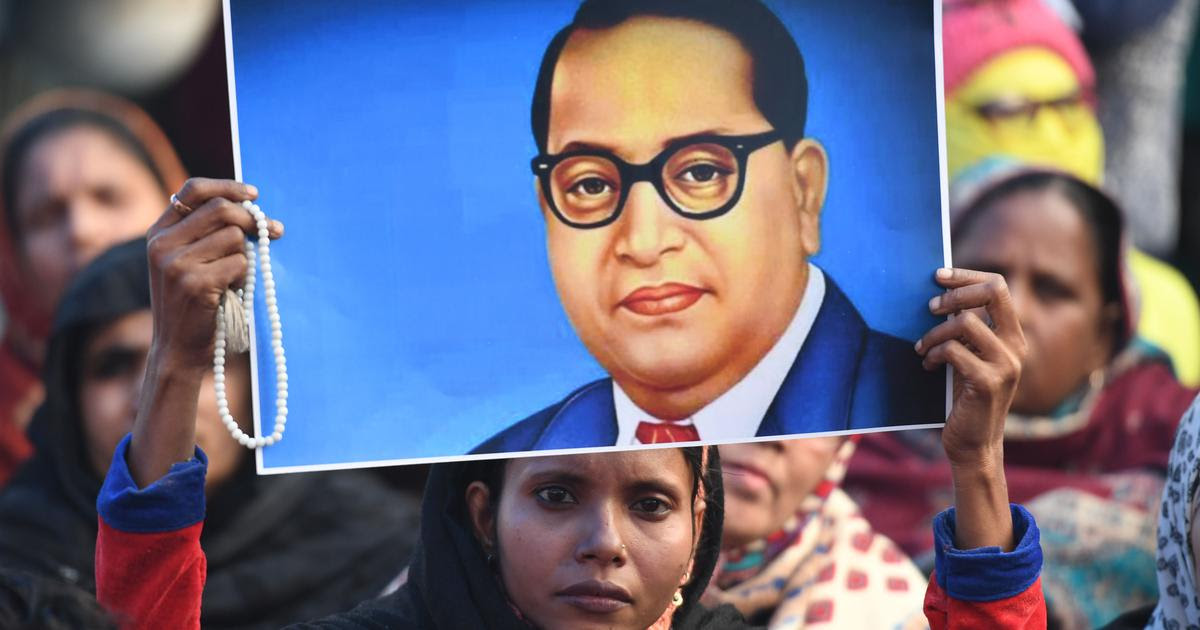
Why naming the new Parliament building after BR Ambedkar would be a true step towards decolonisationPrakash Singh/AFP

In recent weeks, there has been a demand for the new Parliament building being constructed on the revamped Central Vista in New Delhi to be named after the architect of the Constitution and anti-caste leader BR Ambedkar.

On September 14, the Telangana Assembly passed a resolution urging the Centre to name the new Parliament building after Ambedkar. The Bharatiya Janata Party was absent during the debate about the resolution.

The next day, the Telangana Rashtra Samithi-led government declared that the new secretariat in the centre of Hyderabad would be named after Ambedkar. Chief Minister K Chandrasekhar Rao added that he would write to Prime Minister Narendra Modi requesting him to name the new Parliament building in Delhi “Ambedkar Parliament”.

The demand is finding resonance among civil society groups too and has led to social media discussions as well as public mobilisation. But two questions arise:

Should a Parliament that makes laws for a nation over a long period of time be named after one leader, whatever be their stature and acceptability? Does Ambedkar deserve such a pedestal over all other founders and leaders of India’s parliamentary democracy?

Usually, a parliament building should not be confined to the name of one individual, however great that individual was. Since Parliament represents the whole nation, it should be the “Indian Parliament”.

However, it is a cultural practice in India to name all manner of things after noteworthy individuals. Logically, why not name the new parliament building after any great individual who contributed significantly enough to build parliamentary democracy in India?

The second question requires a comparative evaluation of three personalities who played a key role in institutionalising constitutional parliamentary democracy in India: Ambedkar, Jawaharlal Nehru and Vallabhbhai Patel. MK Gandhi had little to do with the making of the Constitution. Gandhi’s role ended with India achieving freedom as he chose to remain outside the constituent assembly, which drafted the country’s Constitution.

Of the three founders mentioned, the current ruling dispensation holds a hostile view of Nehru, his ideological, theoretical and administrative roles as freedom fighter and as the first prime minister of India. With Nehru as the father figure of the Gandhi-Nehru family that ruled for several years, Modi has positioned himself in direct confrontation with him.

The others that the Modi government may be positively inclined to view then are Ambedkar and Patel. This is evident from the past eight years of the Bharatiya Janata Party’s rule.Jawaharlal Nehru, MK Gandhi and Sardar Vallabhbhai Patel in 1946. Credit: Kulwant Roy, Public domain, via Wikimedia Commons.

Ambedkar and Patel have competing status, no doubt. Evaluating their struggle, theory, practice and the impact of their role on democratic principles and ideals makes them both serious contenders to name the new parliament building after. However, for philosophical and ideological reasons, rather than Patel, it is Ambedkar’s name that should take precedence.

Patel, who hailed from a Shudra agrarian landed family, rose to become a towering freedom fighter, activist, leader and administrator. He went on to unify the country with determination and strong will, persuading the rulers of the many princely states to merg with the Indian Union. Patel was a lawyer and had a successful practice in courts – but he was not a legal philosopher, historian or economist.

Ambedkar, on the other hand, was from the most oppressed category of “untouchables”. He was also a fighter, activist, leader and administrator in his own way. Additionally, Ambedkar was a profound legal and moral philosopher. He trained himself in several disciplines such as history, sociology and politics and economics.

He was a powerful speaker with a command over English, Hindi Marathi and also Sanskrit. He was also well-versed in multiple schools of thought – Buddhist, Vaidic, Jain, Islamic, Christian and more. At the same time he had a command over Euro-American history, philosophy and legal systems.

While steering the drafting of the Constitution and getting articles passed in the Constituent Assembly, his initiations and interventions surpassed those of the rest. Ambedkar’s intellectual power convinced friend and foe in the Constituent Assembly that his conviction to establish a democratic system in India was unmatched.

Yet, as long as the Congress was in full control of the power structures in Delhi, Ambedkar was ignored. India began rdiscovering Ambedkar in the post-Mandal era – after the Mandal Commission report recommending affirmative reservation for backward classes in education and jobs was published in 1980.

From courts to universities and mass movements, Ambedkar’s writings and speeches in the Constituent Assembly and outside became weapons to defend Indian democracy as it entered crisis after crisis. Indian democracy and Ambedkar almost became synonymous.A design of the new Parliament building. Credit: Central Vista website.

The Mandal era resurrected Ambedkar’s commitment to India as a nation. Though Ambedkar knew that Western constitutional ideals evolved in many countries particularly, England and the United States, he drew more relevant principles from Indian history. Thus, Ambedkar made Indian nationalism more grounded than anybody else’s. Buddha’s parables, Mauryan emperor Ashoka’s administrative principles and symbols were made relevant in modern times because of Ambedkar.

He often repeated the three cardinal principles of democracy – liberty, equality and fraternity – from ancient Indian history, not French thought. Ambedkar’s nationalism was not rooted in mythology but in the productive life of the Indian masses. He helped bring from the margins the concerns of the historically oppressed into the constitutional framework.

The Dalits, Adivasis and shudras today owe to him their slowly but surely transforming lives. If the new parliament building is named after Ambedkar, it would be clear that a serious civilisational transformation is underway in India. The complete and true de-colonisation of India will set a new benchmark.

Kancha Ilaiah Shepherd is a political theorist, social activist, author. His books include God As Political Philosopher-Buddha’s Challenge to Brahminism, Buffalo Nationalism and The Shudras-Vision for a New Path, The Weapon of the Other and others.

Courtesy: https://www.kanchailaiah.com/2022/09/24/why-naming-the-new-parliament-building-after-br-ambedkar-would-be-a-true-step-towards-decolonisation/ 
Share:

Esther Baite in Junior Girls Boxing ah Gold Medal mu

Kuki chanu khat in Khelo India Junior Girls & Youth women's open Boxing Championship East Zone ah Gold Medal hinsudoh


LAMKA, 23 Sept:
Amasapen hidia tahsan umtah Panglian Vangkho, Singngat Sub-div, Churachandpur, Manipur akon Pa Jamkhothang Baite le Nu Lhingneilam Baite chanu anichanna Ng. Esther Baite (16yrs) in, SAI NCOE Guwahati munna nisim (15th - 22nd Sep) sung, Sports Authority of India (SAI) tohgon nanoiya anachelha Khelo India Junior Girls & Youth women's open Boxing Championship, East Zone achun 50kg Category in Gold Medal ahinsudoh in ahi.

Hetthei khat chu, Esther Baite hi Achesa 2017 kumma, Mary Kom Regional Boxing Academy a coaching tuni geiya alah ahi.


Hiche SAI tohgonna noiya Khelo India Junior Girls & Youth women's open Boxing Championship East Zone, Guwahati munna achelhahna ahin, Manipur akon category chom cheh a mini (2) in First & second ahinmun, Assam akon numei khat 3rd place amun ahi.


Chule, “ Esther hi ahunglhung ding tukum 19th October le Manipur munna National level Boxing um ding ahin, Manipur akon mi-koh(9) lhendoh (Selected) ahiuvin, inao u Esther jong ajaovin, hichea jong ahung lolhinthei nadin taonan geldoh ute,” tin, Being KUKI Media in Pu Jamkhothang Baite @Esther Baite (Apa) thudoh akineinan aseidoh in ahi. Chule aman aseibe nan, ahunglhung ding phatkit ho tengle ama (Esther) chanchin ho tahdoh din aseiyin ahi.

#KheloIndia #EstherBaite #GoldMedalist

Source: BeingKUKIMedia FB Group


Share:

UZO GHQs APAT NGETNA LEH THEIHSAHNA

United Zou Organisation (UZO) General Headquarters, President Candidate ut te a din in Nomination paper lah thei.


Share:

SHORT FILM COMPETITION - 2022


Share:

KNA STATEMENT

STATEMENT OF KNA/ KNO( B) WITH REGARD TO THE DEATH OF 3 PLA CADRES (Kamjong District ၌ PLA တပ်သားများ သတ်ဖြတ်ခံရခြင်းနှင့် ပတ်သက်၍ KNO/KNA (B) ၏ သဘောထား ထုတ်ပြန်ချက်)

The Kuki National Organization (KNO) and Kuki National Army Burma (KNA-B) strongly condemned the wrongful accusation on KNO/KNA(B) for killing the three cadres of People Liberation Army (PLA) of Manipur on September 17, 2022 in Chasat/Kamjong district of Manipur, India and the misleading news circulating around Facebook and on certain social media as well.

In this regard, the KNA/KNO(B), henceforth, is obliged to make the following statement pertaining to its stand and principles for the interest of the general public:-

1)The KNA/KNO(B) is very firmly committed to its political stand and objectives of the organisation adhering to its unique principles of upholding peaceful coexistence among the different armed revolutionary groups since its formation;

2)The KNA/ KNO( B) has been relentlessly and independently fighting for freedom and  democracy without the involvement of any third party or otherwise is solely focused on regaining of the lost ancestral land inside the territory of Myanmar with the policy of zero interference in the affairs of the Indian politics. As such, the organisation has neither any  form of armed deployment nor armed movement inside the boundary that falls under the jurisdiction of India.

3)Henceforth , such groundless and unsubstantiated accusations with the evil intention of tarnishing and diminishing the good image of KNA/KNO(B) will not be tolerated at any cost and therefore would like to pledge all individuals and parties concerned to refrain away from making similar baseless allegations with ulterior motives in future.

(Francis Kuki)
Info. Publicity
KNO/KNA(Burma) 
Share:

Burmese Language course in Mizoram University

Diploma in Burmese Language and Communication Skill course launched in Mizoram University (MZU) with Institute of Chin Affairs (ICA)
Share:

SUANTAK: The Father of SIYIN (Sizang) or The Root of Sizang

September 19, 2022 (Wednesday): Tuni (Aug 14, 2022) SBMC biakinn ah Lamka, India pan US, Viginia ngamke, Liberty University ah Music tawh kisai sangka tuh hong pai tangvalno Tg. Sangmuan Guite ( kum 18) kiim khat hong kikhawm hi. Ama sia Pa Thawng( Pu Ngo Cin Thawng Sunatak) nah hong kikhop pui ahi hi. Pa Thawng te kungah zintung ahikom hong kikhop pui uh ahi hi.

Kikhop hunsung la tomnote version tuam tak tawh solo la hong sa hi. A la sakdan (version) hoi kasa aa, zong khangno khat in hibang aa version tuam tak tawh hongsak thei sia thupi le ka pakta  pai hi.

Amasia azeini( Sataurday) ni pawlpi bub tangtha kuanna ah zong hong kihel hi. A septhei bang seam va tang hi. Pa Thawng ii mealheak khat hi tuh ci aa ka na um maw phot hi.

Kikhop manzawk ciang biakinn nuai ah an kinetek hi. Ka tona table awnglai ahikom, Pa Thawng in NGO PI kungah to tawng ci in  hong to uh hi. An ne kakawm, thu son kakawm in Pa Thawng in ong metset aa, ka thum ma in thu kason khawm uh hi. 

Koi sungpa  hong pai hi a, bangvai tawh hong pai niziam cite a kipan kana ki dong tato uh hi.

“Manipur ngamke, Lamka khuapi pan kong pai aa, Liberty University ah music(vocal and piano major) tawh kisai sangka tuh in kong pai hi” hong ci hi. 

Pa Thawng tawh koibang aa kikhawm thei ni ziam kana kici uh hi.  Pa Thawng te kung ah zin ka tung hi. THE SUANTAK HOUSE ah zin ka tung hong ci hi. 

The Suantak sia bang kana ziam? ci-in hong dong kik hi. Suantak cisia “Sizangte ii pianna pa”  “ The father of Sizang or the Root of Sizang” ci-in kana zo kik hi. 

“Abraham, the father of Israeli” tawh kibang hi kana ci thua uh hi.

Pu Suantak cisia Sizang mi akicite ii pianna ‘Pu’ ahbl ih pianna ‘Pa’ hi. Sizang mite pianna a bulpi ahbl a zungpi (the root ) tatak ahi hi. 

Sizang mite ii ih  pianna ih pa/pu sia akua tatak ci sia phatak sonthei, pulak thei  kahikom, keima tumtak kalung akim peuma hi. 

✍🏻 Mr Ngo Pi Suantak 
Frederick, MD 
Share:

KUMPINU KISAP DAN APAN THUM DING DAN ZILNA

 “Her Majesty Queen Elizabeth II”

~ Dr. Kammuanmung Thangniang

Pro Pastor, TBC (ABA) Delhi

Pic: Wikipedia

    KUM 70 tak kumpinu ahi Queen Eizabeth II pen British kumpinu teng lakpan kumpinu hisawt pen ahi. February 6, 1952 in Kumpinu douna ana luah in, ah leitung hinkhua bei ni, September 8, 2022, tan British (a tamzaw theih dan in England) kumpinu in ana pang hi.

Kumpinu Elizabeth II luangdapsa pen September 19, 2022 chiangin Westminster Abbey mun a thupitakin vuiliam hiding hi. Hua hun a gam tuamtuam apan milian-milal 500 bang kihel ding hi. Tuate lak a India President, Droupadi Murmu, zong vapang ding hi. Ah minthang kumpinu Elizabeth II sihna in leitung lungliap sakin, gam tampi in lusuunna thu puang hi. Sunna laikhak tampite internet a muhtheih in um a, tua laikhak te laka kammal tallang mahmah khat ahihle, ‘Her Majesty’ ahi. ‘Majesty’ kichi kammal pen British kumpite kisapna kammal ahi. Lai a akigelh thoh chiangin kumpinu ahihle, ‘Her Majesty’ kichi a, kumpipa ahihle ‘His Majesty’ kichi hi. Kihou thohna a ‘Your Majesty’ kichi hi. Majesty ahihle thupina leh thuneihna lam genna ahi a, hihmun a zahtakna kammal a kizang ahi.

Britishte chituamna tak khat ahihle democracy gam hinapi uh, kumpi touna subei lou uhi. Thuneina aneih senglou hangun, British kumpinu leh kumpipan pen zahtakna liantak piakin um uhi- Britishte pu-pa khangthu sawttak apan ana um kumpi touna kepbitna ahih ziak un.

Queen Elizabeth II zahtak taka ah kisapna ‘Her Majesty’ apan zil dinga ideih uh ahihle Pasian zahtakna paik ah poimoh dan ahi. Leitung kumpite bawn hihzatak a zahtakna piak ahihle, leitung leh van tung anei, kumpite kumpi ahi ih biak Pasian pen zahtakna piaktakzaw tham hi. Hih pen Pasian in mihingte alamet zong ahi zing hi.

Pasian zahtakna pen lam tuamtuam a lah theih hi. Tuate laka khat ahihle- thumna ahi. Mathai bung 6 na ih et chiangin, Jesun a nungzuite thumna nei dingdan ahilhna kimu hi. Hua thumna pen “Toupa Thumna” kichi hi. Nungzuite thum dingdan ahih ziakin “Nungzuite Thumna” kichile dikzaw ding hi chih Bible sut pawlkhatte ngaihdan ahi. Ih thum chianga Pasian zahtak a, Pasian thupina pe dingin Jesun nungzuite hung hilh hi: Toupa thumna a, “Na min kizahtak hen” chihin mun poimohtak luah hi.

Pasian zahtakna piakna pen Pasian hihna puanzakna toh khautak in kizawp hi. Pasian hihna- a itna, a siangthouna, a thuneihna, a diknate- ih thum chianga puankhiatkhiat ding ahi. Hua pen Pasian zahtakna, Pasian pawhtawina ahi. Toupa na vanglian hi, Toupa na thupi hi, Toupa na siangthou hi, Toupa na itna tehpi ding umlou hi chihte gengen ding puanpuan ding ahi. 

 ---18092022---


Share:

Manipur State League & AMFA CUP 2022-23 Result & Fixture

⚽ 2nd AMFA CUP 2022⚽

🗓️Today Match Results: 17th September, 2022 (Saturday)


1. CFA 1-1 WAFA

2. KSC 2-2 LYCC

Tuni AMFA Cup 1st match Classic Football Academy te  leh WAFA Wangoi te kichep chu anom lheh in vet nom jong aum in ahi. *Tuchung AMFA Cup 2022 hi KuKi Sporting Club (KSC), Classic Football Academy (CFA) , LYCC leh WAFA amaho team li (4) holah a khat pen pen in alah ding ahi ti mipi ginchat chu ahi.*

*Fixture: 19/09/2022 (Monday)*

1. AMOFA Vs AFC @ 12:30 PM

2. JSYC KPI Vs F4C Saikul @ 2:45 PM


🌅The 15th Manipur State League 2022-23

Fixture: 18/09/2022 (Sunday)

1. SU Vs MPSC @ 12:30 PM

2. RAU (Turf Ground neite) Vs KLASA FC (2021 State League Champion) @ 2:45 PM

Amun: Artificial Turf Ground, Lamlong, Imphal. 
Share:

Pu Sumpi dinga panpih ngetna


Comedian minthang Pu SUMPANDI @ Sumpi Hanghal esophagus cancer natna akipan a ki-etkolna ding in na kiphal bangbang panpihna ka hon ngen uhi.


Panpihna tawm leh tam hitaleh, na kiphal bangbang a nuai a bank account ah ana khak in. 


Bank Details:

Account Name: Sumpi Hanghal

Account Number: 30715800162

IFSC: SBIN0006182


UPI ID: sumpihanghal@oksbi


#Charity4Sumpandi

#initiative of Zogam.com


Share:

The 2nd Manipur AMFA Cup 2022

Sadar Hills' J. Songtun YC shared thrilling 4-4 draw with AMOFA ; LYGSEDA beaten by LYCC

USA Khurai and Angtha FC also won

Churachandpur's SYMROPIA FC to take on YOSC and Saikul's F4C face Ukhrul's UBFC tomorrow

📝By : Seiminlun Kipgen
September 15, 2022 (Thursday)
=========================

It was just few days Manipur's second-tier football league - the 2nd AMFA Cup 2022 started but the league has already witnessed lots of dramas and high-scoring matches and in yesterday's highly spectacular match, Sadar Hills' J. Songtun Youth Club forced a stunning 4-4 draw against former Manipur State League giants AMOFA of Moirang while LYGSEDA of Lonpi Area went down 3-1 against LYCC, Liwachangning, Chandel at Artificial Turf Ground, Lamlong, Imphal.


In a match between J. Songtun YC and AMOFA, Mangginhao Kipgen scored three goals for the former while Samson also grabbed hattrick for the latter i.e. AMOFA.


In a breathtaking first-half, it was AMOFA who went 2-0 ahead just 15 minutes into the game with strikes by Samson but Mangginhao Kipgen struck twice to level the score 2-2 in the half-hour mark and after K. Engo Singh restored lead for AMOFA in the 35th minute, J. Songtun YC wasted no time to get back on track through Akash Rai and the absorbing first-half ended 3-3.

Again, it was AMOFA who went ahead in the second-half as Samson completed his hattrick 5 minutes into the restart but the drama had not ended there as Mangginhao Kipgen completed his hattrick in the opposite goal  15 minutes from time and the pulsating encounter ended 4-4.


Earlier in the day, LYCC, Liwachangning, Chandel claimed 3-1 win against fellow Chandel District outfit LYGSEDA of Lonpi Area 3-1 to open their campaign on a strong note. Goals from SK Bunchong Lamkang and Dilbung Rengchong Lamkang put LYCC 2-0 ahead midway through the first-half but to ensure a promising second-half, Thangminlun Khongsai reduced the deficit for LYGSEDA in first-half added time. LYGSEDA put laboured performance in the second-half as they bid to comeback but SK Bunchong Lamkang scored his second of the afternoon to ensure 3-1 win for LYCC Liwachangning, Chandel.


In today's first match, hattrick by Shamjetshabam Boy Singh helped USA to a 4-1 thumping victory over TRUGPU, Nambol while newly promoted Angtha FC trounced FC Lamjao 3-0 courtesy of brace by Reisangmi Khodang and a goal by M.Somokanta Singh.


In tomorrow's fixtures, SYMROPIA FC of Churachandpur will take on Imphal East's YOSC of Khurai in the first match while  Football 4 Change of Saikul face UBFC of Ukhrul in the day's second matchday fixture.


After putting in strong performance last term, SYMROPIA FC are bidding to earn promotion this year with the acquisition of more talents into their squad and their resolve will be tested tomorrow when they face YOSC Imphal.


Meanwhile, Football 4 Change of Chandel had a terrific run up to the quarter-final of CC Meet last year and after earning corporate entry into this league, they will be gunning to test themselves when they take on State Winners' Cup finalists UBFC of Ukhrul tomorrow.


📃 Tomorrow's Fixtures :
16th September, 2022 (Friday)

1. SYMROPIA FC vs YOSC @ 12:30 pm.

2. UBFC vs F4C @ 2:45 pm.

Venue : Artificial Turf Ground, Lamlong, Imphal.

SYMROPIA FC squad list
1. Ginsawmlian (GK-1).
2. Lamgoulian Tungnung (GK-25).
3. Paul Paumuan (12).
4. Siamminthang Valte (11).
5. Peter Khumrolian (8).
6. Samuel Thangmuantung (13).
7. Lamminmawi (2).
8. Toimung (16).
9. Thangkaptuang Milun (9).
10. Th. Henginlal Vaiphei (5).
11. Jehovah Lalthangsanga (24).
12. Khupminlun Seldou (22).
13. T. Helsuanpau (21).
14. T. Kapkhankhual (3).
15. Samuel Ramtha Hmar (20).
16. Mangminlal Mate (19).
17. Manu Lalremsiem (7).
18. Alex Liankhanlal (18).
19. John Minlun Tungnung (10).
20. Lalminlian (17).
21. Manglianthang Simte (14).
23. Jack Neihsial (4).


Head Coach: Immanuel Lalrohlun Joute.

Assistant Coach: Minlun Tungnung.

Manager: Pauminthang Simte.

Assistant Manager: Gouminlian Tungnung.

Medic: Vinch Simte.


____________________________________

📃 Football 4 Change Squad List:

Goalkeepers-
1. Lalboi Haokip (1).
2. Lunjathong Kipgen (20).

Defenders-
1. Sei Joseph Haokip (4).
2. Houlungou Mate (3).
3. Ngamminlun Khongsai (18).
4. Thangjalen Touthang (12).
5. Thongminthang Lupheng (2).
6. Letgoulal Touthang (25).
7. Kamgouhao Doungel (24).
8. Mangminlun Singson (5).

*Midfielders-*
1. Abelson Jachi(11).
2. Kishor Tiwari(7).
3. Lunkhongam Chongloi (14).
4. Manglenthang Singsit (13).
5. Mangminlal Haokip (8).
6. Seigougin Chongloi (6).
7. Seiminthang Khongsai(16).
8. Gingunhao Haokip(21).
9. Thonggoumang Touthang (27).
10. Thangboilen Doungel (23).

*Forwards-*
1. Haogouthang Haokip (9).
2. L.Lalgungin Lotjem (15).
3. Seigoulen Singsit (19).
4. Khaigousang Kipgen (29).
5. Jangminlun Haokip (28).


Head Coach – David H. Suatak.

Asst. Coach – Shimjou Mangzel.

Manager – Seikam Lotjem.

Asst. Manager – L.Tuboi.

Physio- Dr. Len. 
Share:

Kuki People's Revolutionary Front (KPRF): Press Release

Share:

New DC Pherzawl: Shri Haulianlal Guite, IAS

Shri Joseph Pauline Kamson, IAS handling charge of DC Pherzawl to the new DC Shri Haulianlal Guite, IAS yesterday at 1:00 pm at the Office Chamber of DC Pherzawl Camp Office, Tuibong, Churachandpur.


Share:

DCS & BCS Course opens in UTC Bengaluru


Share:

Pa Khum takes on drug users

𝗧𝗨𝗭𝗜𝗡𝗚𝗞𝗔𝗟 𝗣𝗔𝗞𝗛𝗨𝗠 𝗟𝗘𝗛 𝗔 𝗧𝗘𝗔𝗠 𝗧𝗘

LAMKA, 14 SEP --- Drugs addicts atamzawte inle, lamlian gei a naupang leh mipi muh a kikap pen kilawmlou leh minsiathuai ahi chih theisiam mahmah uh ahi. Amau mahmah in hon duty pih a hon kithuahpihta uh ahi. Amau tungah kipahthu i gen hi.

Khopi dangte ah le drugs addicts tampi om uh. A khopi laizang ua mipi muh a kikap muhding om ngeilou uh ahi. Akikapna ding uh atuam a le bawlsak ngailou. Mi muhlou a, akikap theihna ding mun uh mu mahmah uh ahi.

Addiction beisakna dia panlakna hilou ahi. Naupang leh mipi muh a lampi lai a kikap ding dalna ahi. Drugs addict te hawlman sawmna le hilou ahi, chih theihsiam ding. Tun le atamzawte in ahon kithuahpih ziak ua, Tedim Road lamlian gei a kikap tawm mahmah ta uh. Atheisiam nailou leh aphengphi deuh tamloute kia ahi kikapta. 

*via WAP
Share:

SIMTE YOUTH ORGANISATION GHQ IN CABINET EXPANSION NEI

Simveng, Sept 13: Tuni zingkal 7:30am in Simte Inn, Simveng ah Simte Youth Organisation, Gen Hq in Cabinet Expansion nei a, Social & Culture Deptt, Information & Publicity Deptt, Ambulance Incharge, Advisers, Caretaker-cum-Property Secy., ding anuai a bang in panmun hawmgual uhi.

Social & Culture Deptt. :
(a) B. Lamginlal Simte, Secy
(b) T Hangmuanlal

Information & Publicity Deptt. :

(a) H Chinmuanlal, Secy (Internal)
(b) P TunlianJohn, Secy (External)
(c) H Chinkhanson, Asst Secy.

Ambulance Incharge:
(a) H Liankhochinthang
(b) L Thangthianlam

Caretaker-cum- Property Secy.:
Mr T. Thangmuanlian

Advisers:
(a) H Nehzasoi Simte
(b) T Goukhomang Simte
(c) Th Pauchinthang


H Pauzathang Simte, President,SYO GHQ Oath Commissioner a pang in amaute GINUMNA THUCHIAM neisah hi. Member thahten Ginumna suai(signature) a kaih zoh un Rev B Haupu Simte, CBC in Vaangpiahna leh Haamteisahna nei hi.

Sd/-
(P TUNLIANJOHN)
Secy (External)
I&P Deptt
SYO GHQ
Share:

CM LAUNCHES SPARROW FOR MCS AND MPS


Imphal, 13 September, 2022 --- 
Chief Minister Shri N. Biren Singh today launched the Smart Performance Appraisal Report Recording Online Window (SPARROW) for Manipur Civil Services (MCS) and Manipur Police Services (MPS) at the Chief Minister’s Secretariat.

 "SPARROW" is an online system for assessment and record keeping of Annual Confidential Report (ACRs) of officers based on the comprehensive performance appraisal dossier that is maintained for each member by the Government. The system is being implemented in the State for MCS and MPS in the first phase. The Application is developed by National Informatics Centre in consultation with ACR Cell and Department of Information & Technology, Government of Manipur.

The URL for the application is  https://sparrow.mn.gov.in

Chief Secretary Dr. Rajesh Kumar, Director General of Police Shri P. Doungel, Additional Chief Secretary Shri M.H. Khan and other senior civil and police officers also attended the programme.

Interacting with the officials, Shri N. Biren Singh expressed the need to adopt a holistic system of promotion of Government employees so that they perform their duties with interest and dedication. He continued that senior officers shouldn’t make any discrimination among their subordinates during performance appraisal, forgetting their personal enmities with them if any. The Chief Minister further stressed the importance of senior officers to groom their juniors in order to make them fit to perform their jobs, while getting promoted to higher offices.

It may be mentioned that the application aims to facilitate the electronic filling of ACR in a way that is not only user friendly but also allows filling from anywhere anytime as per convenience. The system will reduce delays in submission and completion of ACRs. With the electronic system in place, the recording and movement of ACRs forms become seamless, quick and convenient due to inbuilt alert mechanisms through different modes at appropriate stages. It also provides status checks so that the officers know where their ACRs are pending as well as what is pending with them. (DIPR)

Share:

Recent Posts

Popular Posts

Articles

SUBSCRIBE

Thangkhal Bible in Mobile

Mobile phone a Thangkhal NT Bible koih ding dan

Read Thangkhal NT Bible

JOIN KV fb

ZOMI FINS

PHOTO GALLERY

THANGKHAL COSTUMES
TBCWD TOUR 24-Sept-2022
Kulhvum Prayer

Blog Archive